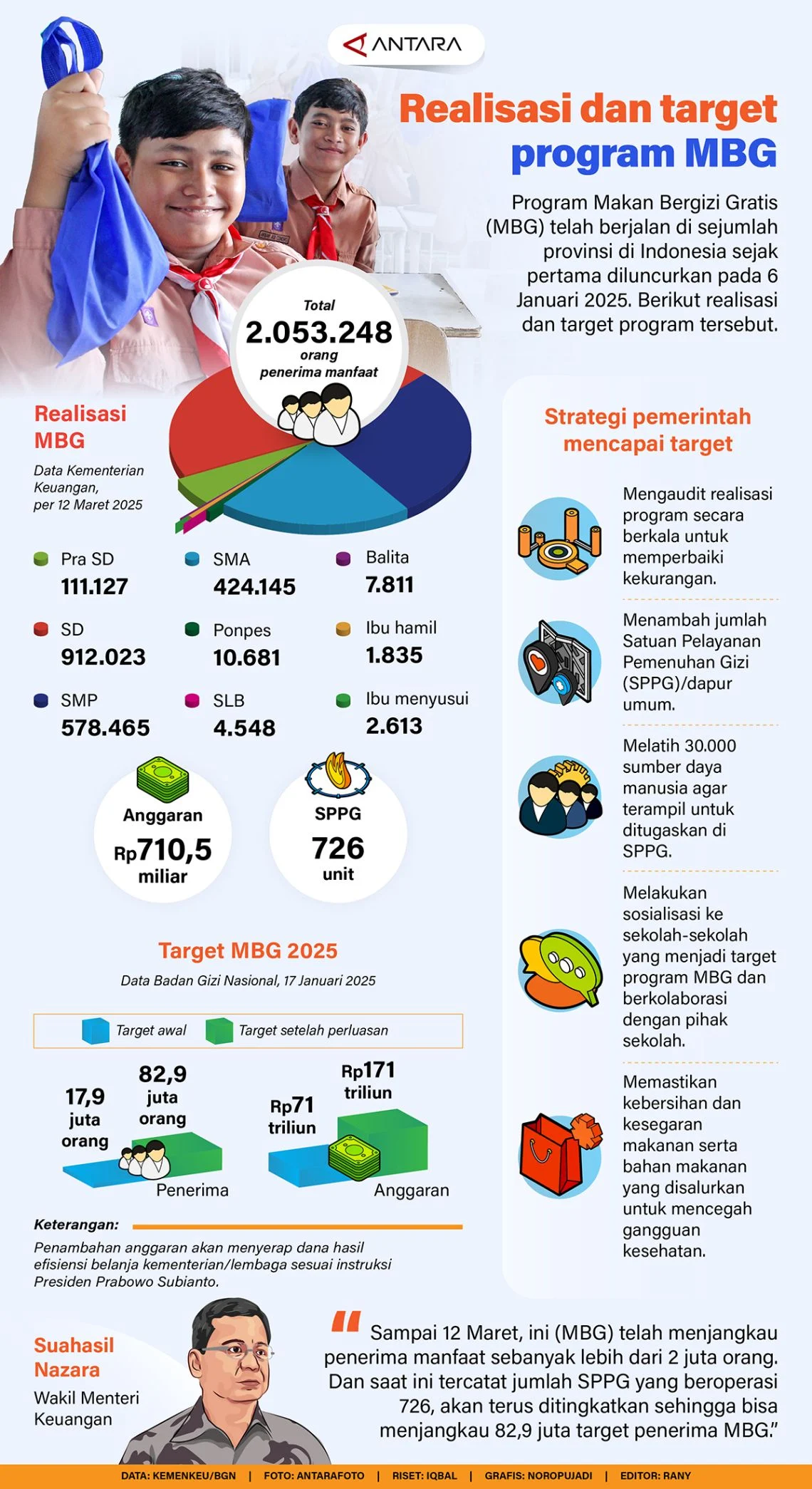
Media Kampung – 08 April 2026 | The Ministry of Nutrition clarified that a batch of electric motorcycles bearing the National Nutrition Agency (BGN) logo has been procured to support the Free Nutritious Meal (MBG) program. The vehicles are intended for the heads of Nutrition Service Units (SPPG) across the country.
The procurement was included in the 2025 state budget and began its first delivery phase in December 2025. The plan foresees a total of 25,000 units to be supplied to SPPG leaders.
As of early April 2026, the agency reported that 21,801 motorcycles have been received, representing 87% of the ordered quantity. The remaining units are expected to arrive before the end of the fiscal year.
Social media users previously claimed that 70,000 motorcycles had been ordered for the program, especially for West Java. Officials dismissed the claim as misinformation and reiterated the official figure of 25,000 units.
The head of BGN, Dadan Hindayana, confirmed that the vehicles have not yet been distributed to the SPPG heads. He explained that each motorcycle must first be recorded as state‑owned goods (BMN) before it can be handed over.
The registration process is required by government regulations to ensure accountability and proper asset management. Only after the BMN status is confirmed will the motorcycles be allocated to the field officers.
Minister of Finance Purbaya Yudhi Sadewa also commented on the controversy, emphasizing that the primary priority of the MBG budget should be food procurement. He warned that spending on non‑essential items could divert resources from the core goal of providing meals.
Purbaya noted that a similar procurement request had been submitted last year but was rejected by the finance ministry due to budget constraints. The current approval reflects a re‑evaluation of operational needs for the program.
Critics argue that allocating billions of rupiah for motorcycles may not be the most efficient use of public funds. They suggest that alternative solutions, such as improving existing transport fleets, could achieve the same logistical support.
BGN officials counter that electric motorcycles offer lower operating costs and reduce carbon emissions compared to conventional vehicles. They also argue that the mobility of SPPG heads is essential for supervising nutrition activities in remote areas.
The agency plans to complete the BMN registration for all units by the second quarter of 2026. Once the process is finished, the distribution will be coordinated with regional nutrition offices.
Regional nutrition offices have been instructed to prepare inventory lists and training schedules for the incoming motorcycles. The training will cover safe operation of electric vehicles and basic maintenance.
The procurement has sparked a broader debate about transparency in government spending. Observers call for clearer communication to prevent speculation and maintain public trust.
As of now, the motorcycles remain stored in central warehouses awaiting administrative clearance. The government affirms that the assets will soon support the MBG program’s field operations, reinforcing nutrition delivery nationwide.
The procurement contract was awarded to a domestic manufacturer specializing in electric two‑wheelers, following a competitive tender process conducted by the Ministry of Finance. The agreement includes a warranty period of three years.
The total cost of the 25,000 motorcycles is estimated at around Rp 1,5 triliun, funded partly by the central budget and partially by regional contributions. The financing plan aligns with the government’s push for green mobility.
Local governments have expressed interest in replicating the electric motorcycle model for other public services, such as health outreach and disaster response. They view the initiative as a pilot for broader electrification.
Environmental NGOs have welcomed the shift to electric vehicles, citing reduced emissions and lower noise levels in rural communities. However, they call for a comprehensive charging infrastructure to be established.
The Ministry of Energy and Mineral Resources has pledged to install fast‑charging stations at strategic points near provincial nutrition offices. The rollout is scheduled to begin in mid‑2026.
Observers note that the BMN registration process, which historically takes months, could delay the operational benefits of the motorcycles. The agency has set up a task force to accelerate the paperwork.
With the administrative hurdles being addressed, the government expects the electric motorcycles to enhance field coordination for the MBG program and contribute to Indonesia’s nutrition targets for 2026.