

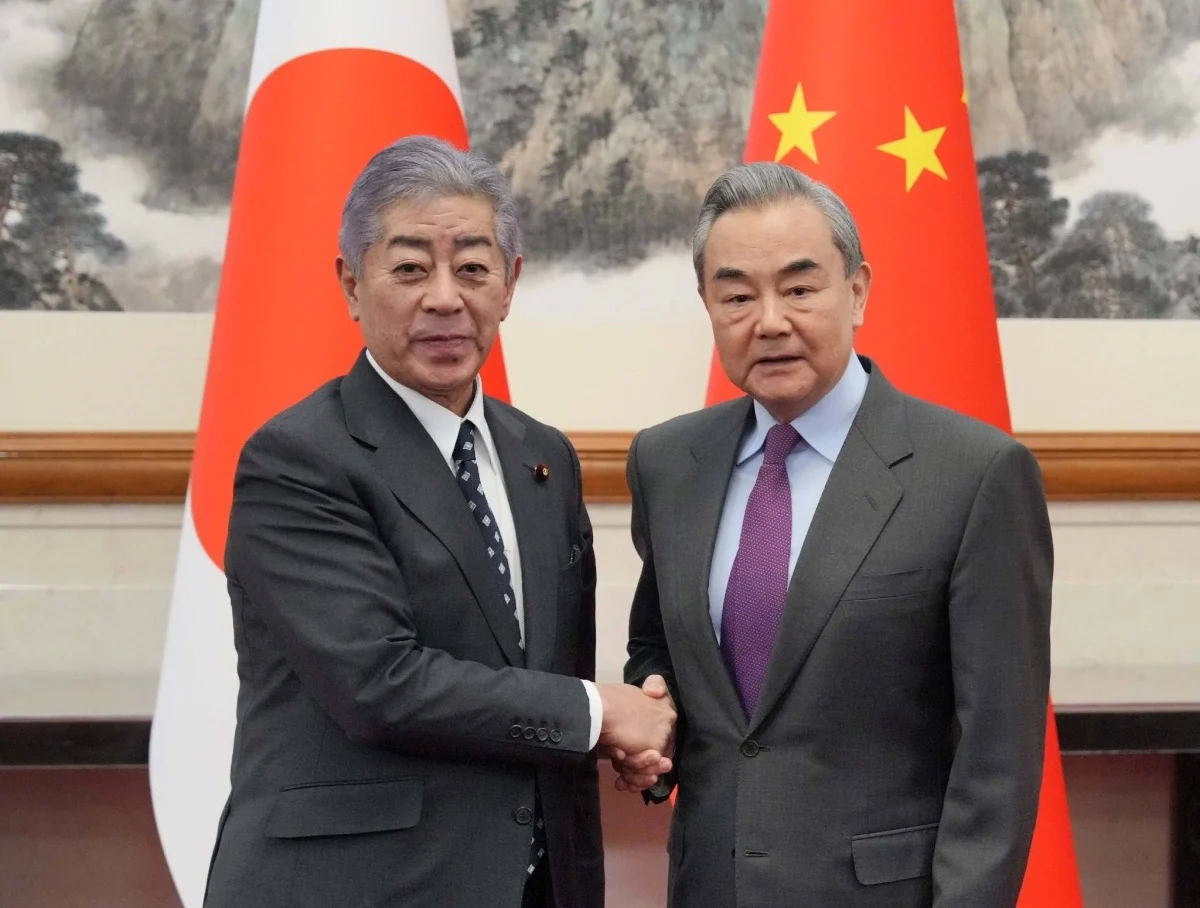
Media Kampung – 10 April 2026 | Japan officially downgraded its strategic assessment of China, marking the first change in a decade.
The shift signals a reassessment of bilateral ties amid growing security concerns.

The Ministry of Foreign Affairs announced on Tuesday that China will be classified as a neighbor rather than a partner in the annual security outlook.
The new label reflects a more cautious stance.
Japanese officials explained that the decision stems from repeated incidents in the East China Sea, including contested patrols around the Senkaku/Diaoyu islands.
Tokyo views these actions as destabilizing.
The downgrade also considers China’s expanding military capabilities, such as the development of hypersonic missiles and increased naval deployments.
Analysts note that these advancements narrow the strategic gap between the two powers.
In a briefing, a senior diplomat said Japan must align its policies with the reality of a more assertive China.
He added that cooperation remains possible but will be limited to narrow areas.
The move follows a series of diplomatic frictions, including the suspension of high‑level talks after a Japanese ship was harassed by Chinese coast guard vessels.

Both sides exchanged accusations of provocation.
Washington has welcomed Japan’s decision, describing it as a realistic appraisal of regional dynamics.
The United States and Japan have intensified joint naval exercises in recent months.
Chinese foreign ministry responded by calling the downgrade unwarranted and based on misinterpretation of facts.
It urged Japan to refrain from politicizing bilateral issues.
Despite the tension, trade between the two nations remained robust, with bilateral commerce exceeding $200 billion last year.
Economic interdependence continues to moderate political disagreements.
Experts warn that the reclassification could affect multilateral forums where Japan and China collaborate, such as the East Asia Summit.
The shift may lead to more selective participation.

Regional observers note that other Asian countries are watching closely, as the change may influence their own security calculations.
Nations like South Korea and Australia have expressed similar concerns.
The Japanese cabinet is expected to review the policy in the upcoming security council meeting.
Any further adjustments will depend on developments in the Indo‑Pacific theater.
Historically, Japan and China shared a partnership framework established after the 2008 global financial crisis.
The recent downgrade marks a departure from that era.
The downgrade does not immediately alter existing agreements on issues like climate change and pandemic response.
Those domains remain under joint cooperation mechanisms.
Analysts from the Institute of East Asian Studies argue that the label neighbor carries a neutral connotation but signals a lower priority in strategic planning.

It suggests a shift from collaboration to monitoring.
The Japanese public opinion poll conducted in March shows a rise in concern over China’s regional behavior, with 62 % favoring a tougher stance.
This domestic pressure contributed to the policy shift.
Conversely, Chinese media portrayed the decision as an attempt by Japan to isolate Beijing.
State outlets emphasized the need for constructive dialogue.
In the diplomatic arena, Japan plans to maintain communication channels to prevent accidental escalation.
A hotline between defense ministries will stay operational.
The downgrade may also impact future investment flows, as firms reassess geopolitical risks.
Some Japanese companies have announced a review of projects in Chinese coastal provinces.

Nonetheless, the two economies are interlinked through supply chains, especially in technology components.
Disrupting these links could have global repercussions.
The broader implication of Japan’s decision is a possible recalibration of the regional security architecture.
It could encourage ASEAN nations to seek a more balanced approach.
In conclusion, Japan’s reclassification of China reflects a pragmatic response to evolving strategic realities, while keeping diplomatic avenues open.
The development underscores the delicate balance between competition and cooperation in East Asia.
Artikel ini dipublikasikan oleh Media Kampung.
Tinggalkan Balasan