

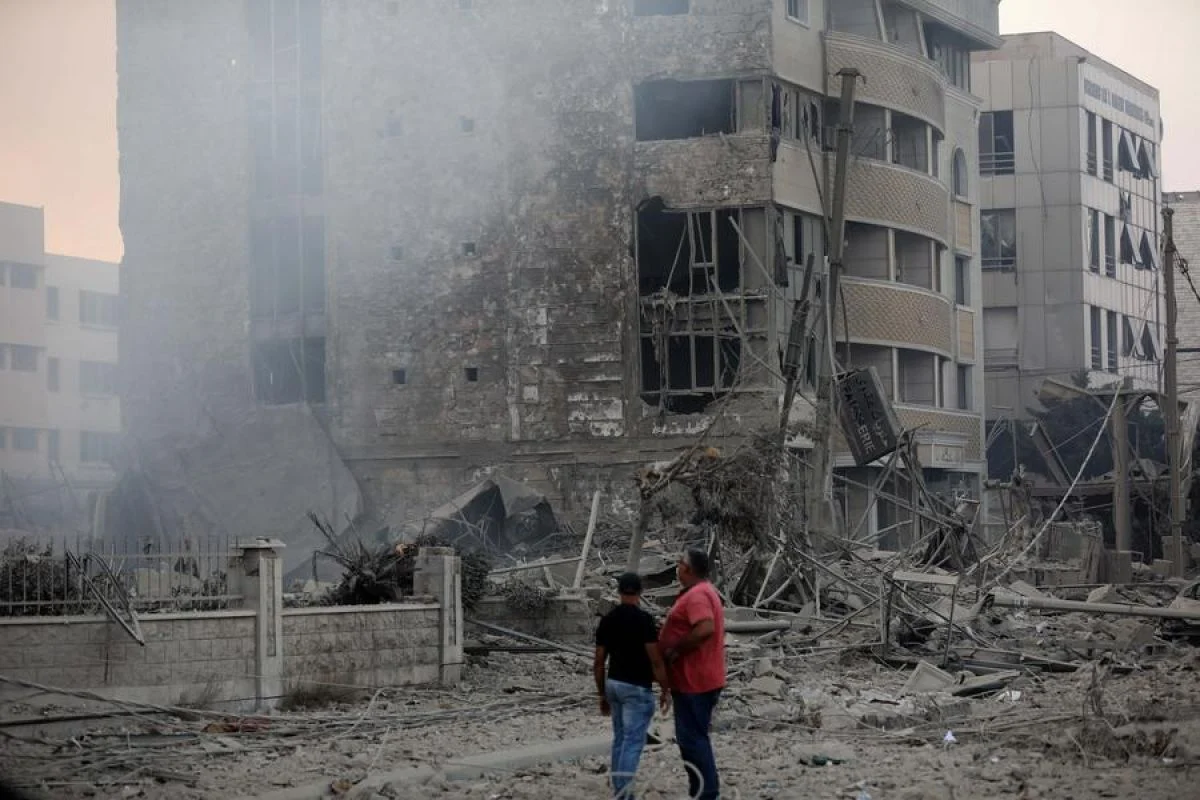
Media Kampung – 06 April 2026 | Israeli Air Force carried out an air strike on Saturday that flattened a building in Zuk Almaf, also known as the intersection of the city of Tyre, in southern Lebanon. The structure collapsed after being hit by an Israeli missile.
Lebanese media reported that Israeli fighter jets also targeted Hamadie east of Tyre and the Maarka crossing on the city’s outskirts. The military issued evacuation warnings to residents of Tyre, citing operations against Hezbollah positions.
The Lebanese Ministry of Health announced that the attacks have raised the death toll to 1,422 people and injured 4,294 since the conflict intensified on 2 March. The figures include casualties from multiple strikes across the south.
Among the latest casualties, three civilians, including two women, were killed in an apartment building in the Ain Saadeh hills east of Beirut. The Ministry confirmed six more injured in the same incident.
In the southern suburbs of Beirut, a separate air strike hit residential blocks in Jnah and Roueiss, killing four people and wounding thirty. The Chinese embassy, located in Jnah, was not damaged.
The Jnah district also hosts the largest temporary shelter for displaced persons, housing over 8,000 refugees from southern and eastern Lebanon. The strike raised concerns about the safety of the shelter’s occupants.
Israeli forces announced a ground operation in southern Lebanon on 16 March, following a series of rocket attacks by Hezbollah that began on 2 March. The operation aims to neutralize Hezbollah’s launch sites.
Hezbollah’s involvement has escalated the conflict, prompting Israel to expand its air campaign to the Beqaa valley and the outskirts of Beirut. Analysts say the fighting risks a broader regional escalation.
In Jerusalem, hundreds of Israeli citizens gathered to protest the war, demanding an end to the conflict with Iran and the resulting global fuel crisis. Demonstrators carried drums and banners calling for public funds to be used for civilian needs rather than military coalitions.
One protester said, “We want our government to stop the war and protect our families.” The sentiment reflects growing war fatigue among the Israeli public.
The Lebanese army reported that Israeli jets also struck a small speedboat near the Shebaa border area on Saturday, capturing a man on the spot. The incident underscores the fluid nature of the front line.
In Tyre’s port, a missile hit a small boat and damaged several other vessels moored nearby. Local fishermen reported loss of livelihood and fear of returning to the water.
The health ministry warned that hospitals in the south are operating under severe strain, with many beds occupied by war casualties. A Lebanese‑Italian hospital in Tyre remains open despite damage to windows and ceilings.
The hospital’s director said, “We will continue to provide essential medical care despite the destruction.” Staff are working overtime to treat both civilians and injured combatants.
International agencies have called for an immediate cease‑fire and unhindered humanitarian access. The United Nations has urged both parties to respect civilian protection under international law.
Satellite imagery released by independent analysts shows extensive damage to residential neighborhoods in Tyre and the surrounding countryside. Reconstruction will require significant resources and time.
The economic impact of the strikes is already visible, with local markets disrupted and supply routes blocked. Prices of basic goods have risen sharply in the south.
Lebanese officials stress that the displacement crisis is worsening, with over 58,000 residents fleeing their homes since the escalation began. Many are sheltering in UN‑run camps under harsh conditions.
Meanwhile, the Israeli Defense Forces continue to monitor Hezbollah activity along the border, stating that any further attacks will be met with decisive force. The situation remains highly volatile.
The latest air strike adds to a growing list of civilian casualties and infrastructure loss, highlighting the urgent need for diplomatic dialogue. The region remains on edge as both sides brace for possible further escalation.
Artikel ini dipublikasikan oleh Media Kampung.






Tinggalkan Balasan