

Media Kampung – 31 Maret 2026 | Israeli Prime Minister Benjamin Netanyahu ordered an expansion of ground operations in southern Lebanon to enlarge a security buffer and curb Hezbollah rocket fire. The directive was issued on 29 March 2026 amid rising cross‑border hostilities.
Israeli forces have moved toward the Litani River, about 30 km north of the border, and have already damaged at least eight strategic bridges crossing the waterway. Commanders say controlling these crossings will restrict Hezbollah’s mobility and supply routes.
The northern command described the goal as a “fundamental change” to the security situation in the north, aiming to push hostile fire beyond civilian settlements. Defence Minister Yoav Katz added that the army intends to secure any remaining bridges and consolidate the buffer zone.
Hezbollah confirmed that more than 400 of its fighters have been killed, while Israeli officials claim they have eliminated thousands of militants and seized most of the group’s rocket stockpiles. Both sides accuse each other of inflating casualty figures.
The escalation has produced a steep humanitarian toll in Lebanon, with the Ministry of Public Health reporting 1,238 deaths since the conflict began on 2 March, including 124 children and over 50 medical workers. More than 1.2 million civilians have been displaced, according to the United Nations.
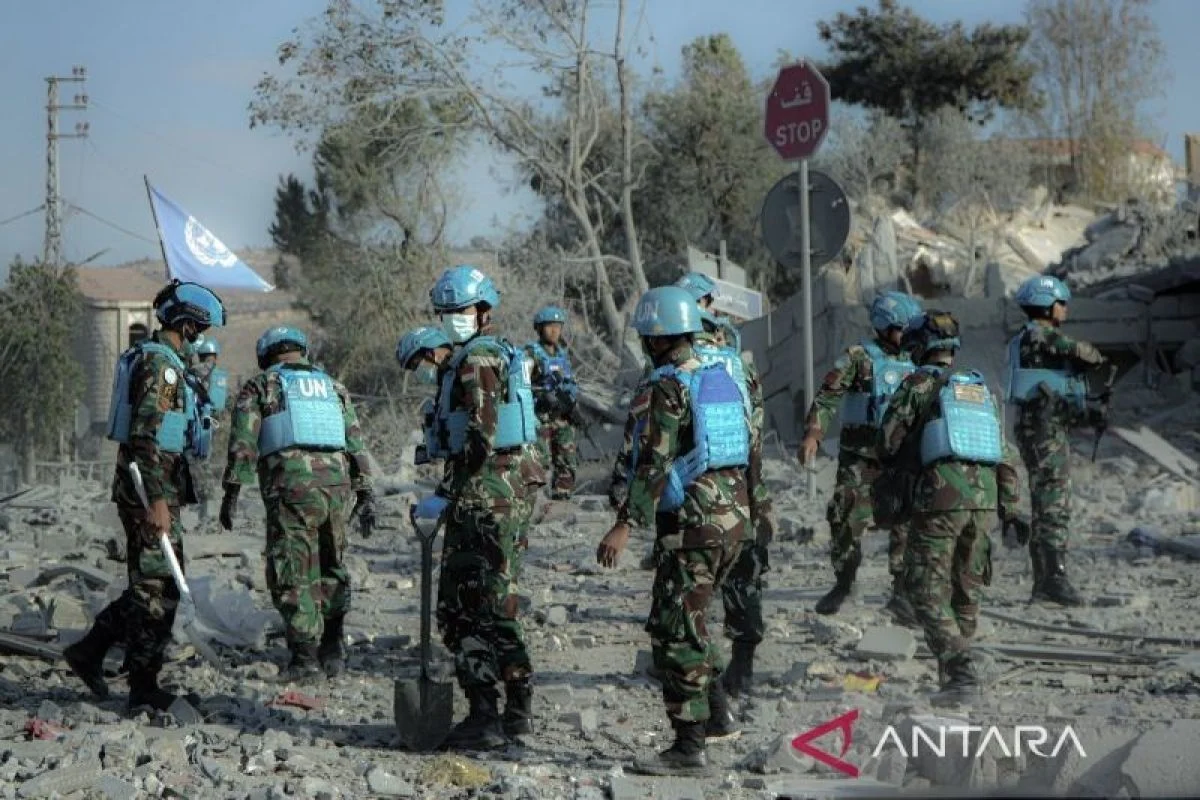
A United Nations Interim Force in Lebanon (UNIFIL) peacekeeper from Indonesia was killed and another wounded after a projectile exploded near the village of Adchit al‑Qusayr. UNIFIL has opened an investigation, stating the incident violates UN Security Council resolution 1701.
Lebanese authorities attribute the blast to Israeli artillery, but UN officials have not confirmed the source, stressing the need for an impartial inquiry. The incident has heightened diplomatic pressure on Israel to respect the safety of peace‑keeping personnel.
Israel justifies the operation as necessary to neutralize residual Hezbollah capabilities that can still launch anti‑tank rockets at Israeli positions. Netanyahu emphasized that “the mission is to keep the border safe and to protect our citizens.”
In a video address, the prime minister invoked divine assistance, saying Israel will prevail “with God’s help.” He also warned that Iran, Hezbollah, and Hamas no longer pose the same threat after recent Israeli strikes.
The United States continues to back Israel militarily, supplying intelligence and logistical support while urging restraint to avoid a broader regional war. Washington’s stance reflects its broader strategy of containing Iranian influence across the Middle East.
France condemned the killing of three journalists in the city of Jezzine, calling the act a serious breach of international law and demanding accountability. French foreign minister Jean‑Noël Barrot urged all parties to respect the safety of media workers.
Regional analysts note that the Litani River advance mirrors tactics used in Gaza, raising concerns about a “scorched‑earth” approach that could further destabilize southern Lebanon. The operation may also pressure Hezbollah to seek a cease‑fire on terms favorable to Israel.
Despite the intensified fighting, the United Nations continues to call for a negotiated settlement and unhindered humanitarian access to affected areas. UN agencies warn that Lebanon’s health system is on the brink of collapse.
As the buffer zone expands, Israeli troops are expected to encounter entrenched militia positions, potentially leading to prolonged ground combat. The outcome will likely shape security dynamics along the Israel‑Lebanon frontier for months to come.
The situation remains fluid, with civilian casualties mounting and diplomatic efforts intensifying, leaving the region on the edge of a wider conflagration. All parties appear poised for further escalation unless a diplomatic breakthrough occurs.
Artikel ini dipublikasikan oleh Media Kampung.







Tinggalkan Balasan