

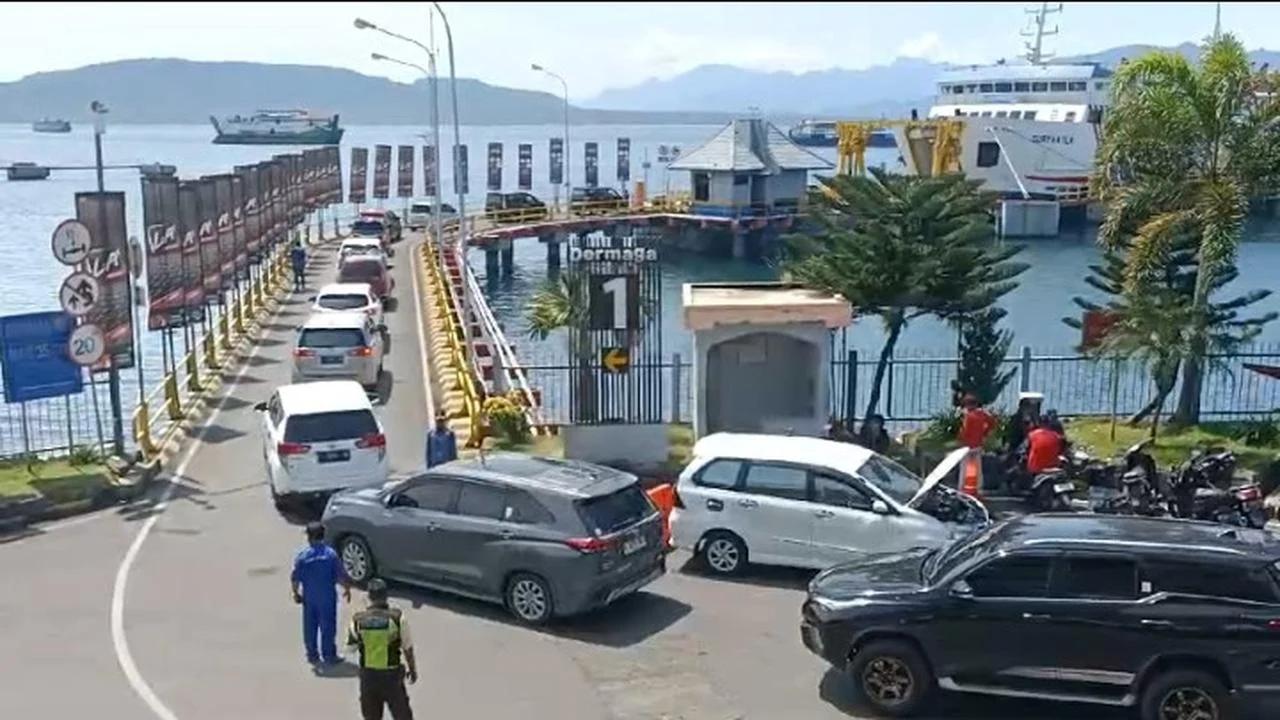
Media Kampung – 02 April 2026 | Traffic towards Pelabuhan Ketapang remains congested on Tuesday, nine days after Lebaran, with queues stretching up to 10 km. The bottleneck involves private cars, intercity buses, and private vehicles heading to Bali.
Although the peak of the return flow was expected on Sunday, the volume of vehicles continues to keep the line from dissolving completely. Drivers from Situbondo report still being stuck for hours before reaching the port area.
Bus conductor Candra, who operates the Bandung‑Bali route, said his bus became trapped just after leaving Alas Baluran at about 03.00 WIB. The vehicle, carrying around 40 passengers, only arrived at the Ketapang terminal at 13.30 WIB and then had to join the waiting line for the ferry.
"I spent roughly eleven hours in that queue," Candra told reporters. He added that the prolonged delay forced many passengers to adjust their travel plans.
A private‑car driver from Kediri, identified only as Haki, recounted a similar experience, stating that his journey stalled from 07.00 after exiting Alas Baluran and only resumed when he entered the port vicinity at 13.28 WIB. He noted that such congestion during the Lebaran return season has become predictable.
Haki suggested that expanding the number of berths and vessels could alleviate the backlog. "If more docks and ships are put into operation, the line would not be this long," he argued.
Motorcyclists also face the slowdown, though some manage to bypass the worst sections. Ristan, a rider from Bondowoso, chose an alternative route but still reported entering the port area only around 13.30 after departing at 09.00.
The ASDP Ketapang service responded by deploying 33 ferries under a “Tiba‑Bongkar‑Berangkat” (TBB) scheme intended to speed up loading and unloading. This operational model reduces the dwell time of each vessel at the terminal.
In addition, the authority extended the peak‑season standby period until 5 April to accommodate vehicles that continue to arrive. Travelers are advised to purchase tickets in advance and factor in additional travel time.
Local police monitoring the corridor confirmed that traffic flow remains irregular, with occasional clearings followed by renewed congestion. They attribute the pattern to uneven distribution of vehicles across the available lanes.
Economic analysts warn that prolonged delays could impact tourism revenue in Bali, as visitors may choose alternate ports or postpone trips. The ferry link between Java and Bali represents a critical conduit for both leisure and commercial traffic.
The regional government of Banyuwangi has pledged to evaluate infrastructure upgrades, including the possibility of a third berth at Ketapang. Officials claim that a longer‑term solution will require coordinated investment between the port authority and private ferry operators.
Meanwhile, travelers who opted for private cars reported higher fuel consumption and fatigue due to the stop‑and‑go conditions. Some drivers indicated they would prefer to use air travel if comparable prices were offered.
Environmental groups raised concerns that the idle engines of thousands of vehicles contribute to air pollution in the border area. They urged authorities to provide real‑time traffic information to help motorists choose less congested routes.
Despite the challenges, the ferry operators reported that loading efficiency improved by 15 % compared with the previous week, thanks to the TBB schedule. This suggests that procedural changes can partially mitigate the impact of high demand.
The Ministry of Transportation has scheduled a briefing next week to discuss further measures, including temporary increase of night‑time sailings. Stakeholders expect that extending operating hours could disperse the peak load.
As of the latest count, the queue length remains around 9‑10 km, and officials anticipate that the situation will gradually improve as the holiday period draws to a close. The overall outlook is that traffic will normalize by mid‑April.
The persistent congestion at Pelabuhan Ketapang on H+9 demonstrates the enduring pressure of Lebaran travel, prompting authorities to adopt operational tweaks while planning longer‑term capacity upgrades.
Artikel ini dipublikasikan oleh Media Kampung.




Tinggalkan Balasan