

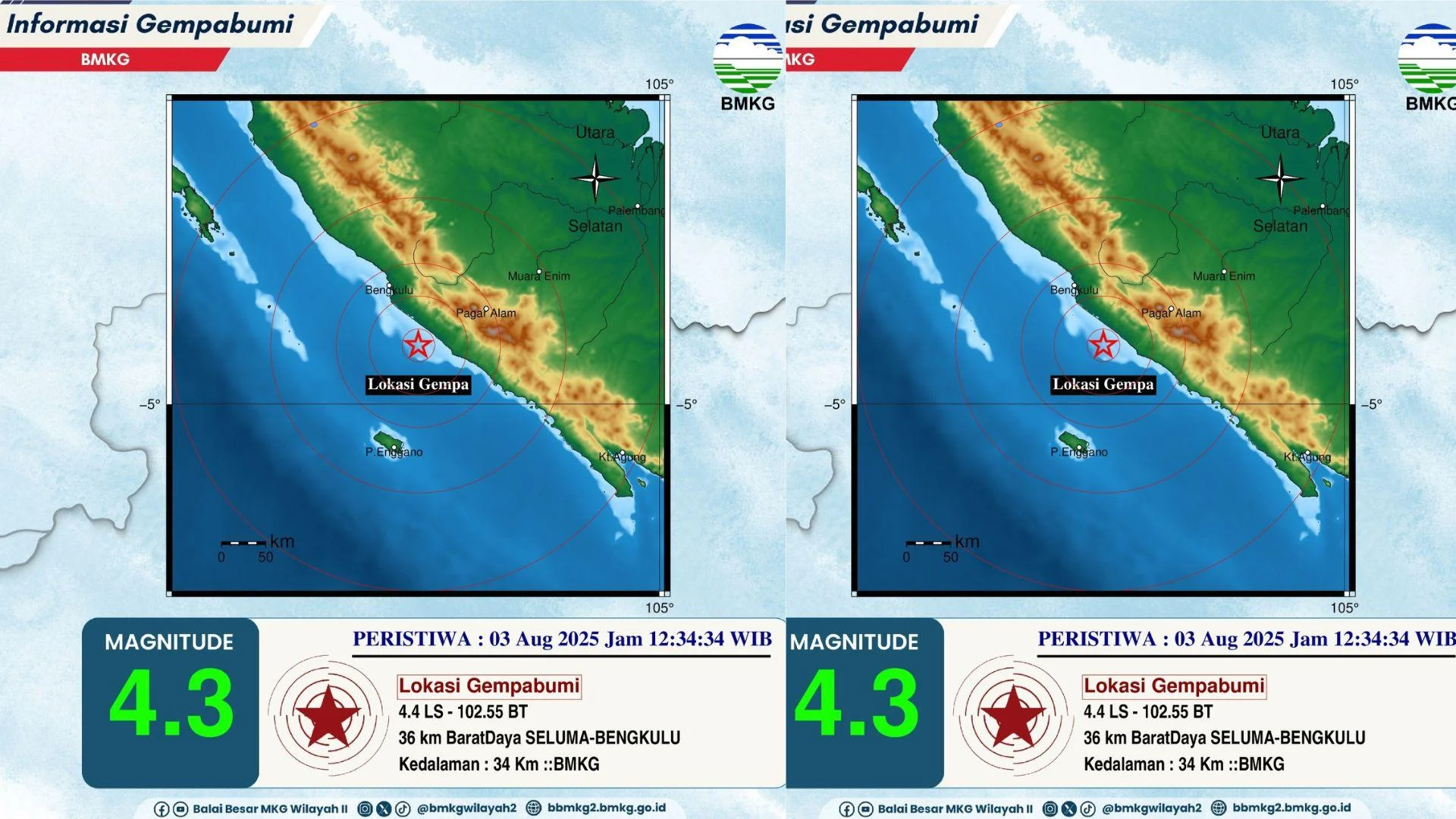
Media Kampung – 10 April 2026 | On Friday evening 10 April 2026, a magnitude 5.3 earthquake struck the district of Bengkulu Utara, with the epicenter located about 14 km northeast of the town at a depth of 89 km.
The tremor was felt in several surrounding districts with intensity level II-III on the Modified Mercalli scale.
The Meteorology, Climatology, and Geophysics Agency (BMKG) confirmed that the quake originated on land, eliminating the risk of a tsunami.
Authorities nevertheless urged residents to remain alert for possible aftershocks.
In response, the provincial disaster agency activated its early warning system and reminded communities to secure heavy objects and avoid panic.

Emergency services reported no casualties or major damage in the immediate aftermath.
The event coincided with the province’s ongoing effort to strengthen preparedness for megathrust earthquakes that could affect the Pacific Ring of Fire region.
Vice Governor Mian highlighted the strategic importance of coordinated action between the government and the Indonesian National Armed Forces.
Earlier this week, the provincial government and the 041/Gamas Regional Military Command conducted the first national megathrust disaster preparedness drill for 2026, involving Bengkulu, Lampung, and West Sumatra.
The exercise aimed to synchronize the roles of local authorities, the BPBD, and military units.
Brigadier General Jatmiko Aryanto, commander of Korem 041/Gamas, stressed that joint training builds rapid response capacity and reduces potential loss of life.
He noted that the drill also tested communication channels and resource mobilization procedures.
Beyond seismic threats, Bengkulu frequently confronts severe weather events such as the recent tornado that damaged dozens of homes in Rejang Lebong.
Governor Helmi Hasan announced that reconstruction of the affected houses will be carried out through a community‑driven approach.
The provincial administration allocated up to Rp10 million per heavily damaged house and Rp1.5 million for those with minor damage.
As of the latest count, 31 households require assistance, including ten with severe damage.
In addition to cash aid, the government distributed essential items such as 100 blankets, 400 children’s food packs, 62 mattresses, 20 portable tents, and 100 staple‑food packages.
These supplies aim to stabilize living conditions while reconstruction progresses.
Governor Hasan emphasized that the relief effort reflects a “gotong‑royong” spirit, involving local officials, civil society, and the military.
He urged swift implementation to prevent prolonged displacement.
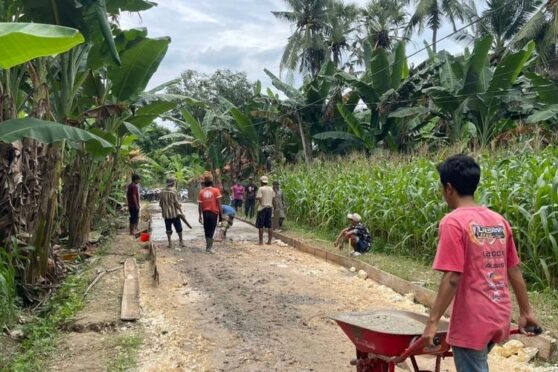
The disaster mitigation strategy also integrates long‑term measures, including risk mapping and strengthening of early‑warning infrastructure.
BMKG continues to monitor seismic activity and will issue updates as needed.
Local authorities have reinforced evacuation routes and installed additional signage in vulnerable coastal areas.
These steps are part of a broader program to address tsunami and landslide hazards linked to the subduction zone.
Community leaders reported that residents are increasingly aware of safety protocols after the recent earthquake and tornado.
Training sessions on first‑aid and emergency kits have been organized in schools and village centers.
The provincial budget for disaster management has been increased for the 2026 fiscal year, allocating funds for equipment, training, and post‑disaster reconstruction.
Officials expect the enhanced financing to improve resilience across the province.
Environmental groups have warned that unchecked development could exacerbate the impact of natural hazards in Bengkulu.
They call for sustainable land‑use planning and reforestation to reduce runoff and landslide risk.
Despite these challenges, the province maintains a proactive stance, regularly reviewing contingency plans with national agencies.
Recent drills have demonstrated improved coordination between civilian and military responders.
Residents of Bengkulu City reported feeling mild shaking, describing the sensation as comparable to heavy traffic on a bridge.
No structural damage was reported in urban areas.
Authorities continue to advise the public to keep emergency kits ready, maintain communication lines, and follow official instructions during any future events.

The BMKG’s 24‑hour hotline remains operational for reporting felt tremors.
The combined focus on immediate response, reconstruction, and preventive measures illustrates Bengkulu’s comprehensive approach to disaster risk reduction.
Officials view these efforts as essential for safeguarding lives and livelihoods.
As the province moves forward, ongoing collaboration with the armed forces, local governments, and communities is expected to strengthen overall preparedness.
The experience from recent incidents will inform future policy adjustments.
In summary, the magnitude‑5.3 earthquake caused limited impact but highlighted the province’s vulnerability and the necessity of robust mitigation strategies.
Continued vigilance and investment remain critical.
Bengkulu’s authorities reaffirm their commitment to protect citizens and restore normalcy after each disaster, relying on coordinated action and community solidarity.
Artikel ini dipublikasikan oleh Media Kampung.






Tinggalkan Balasan