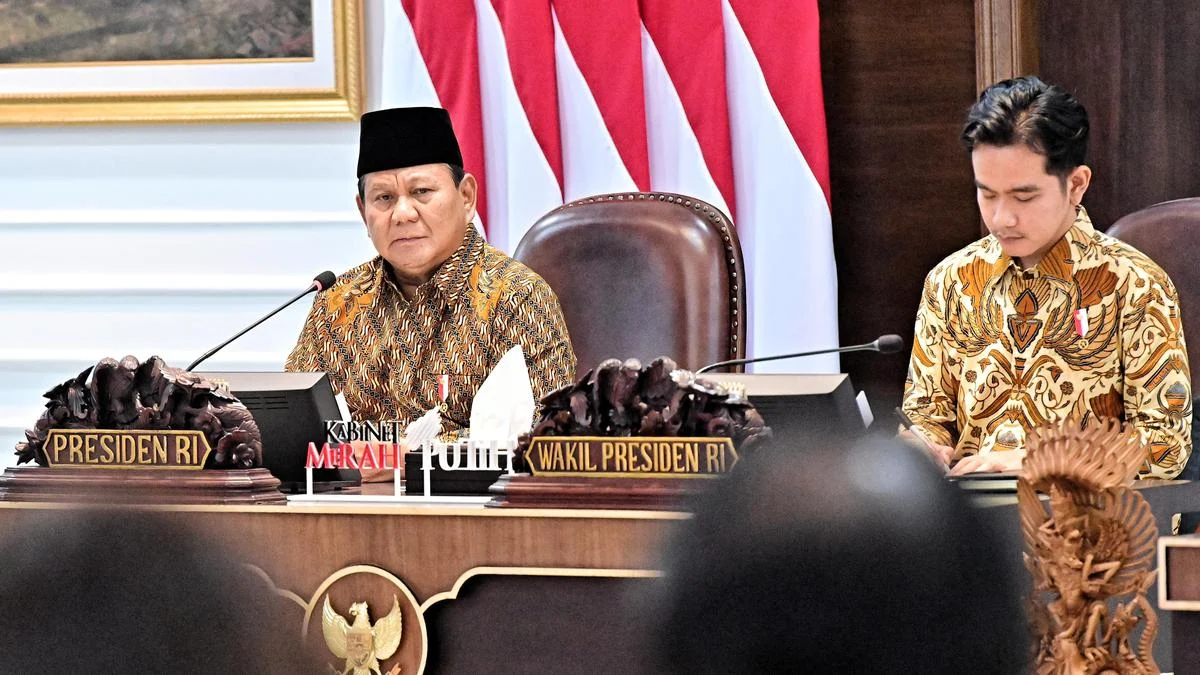
Media Kampung – 21 Maret 2026 | The civil society coalition CELIOS‑AJI Cs submitted a formal lawsuit on Monday at the Jakarta State Administrative Court, seeking to hold President Prabowo Subianto personally responsible for the manner in which the Indonesia‑United States trade agreement has been implemented.
The petition contends that the administration’s execution of the pact breaches several constitutional safeguards and jeopardizes the nation’s economic independence.
According to the complaint, specific articles of the agreement grant excessive market access to American corporations while simultaneously restricting Indonesia’s capacity to regulate key sectors such as agriculture, digital services, and manufacturing.
The plaintiffs request that the court issue an interim injunction to halt the agreement’s enforcement until a full constitutional review can be conducted.
Indonesian law permits the president to negotiate international treaties, but ratification by the DPR and conformity with the 1945 Constitution are mandatory prerequisites for legal effect.
CELIOS‑AJI Cs argues that the trade pact was concluded without the requisite parliamentary deliberation, thereby violating Article 20 which mandates legislative approval for binding international commitments.
“Our objective is to obtain judicial protection for Indonesian producers who risk being exposed to unbalanced competition,” said Maya Suryani, the coalition’s spokesperson, emphasizing that the lawsuit reflects mounting public concern over opaque provisions in the accord.
She added that the action is not directed against foreign investment per se, but aims to ensure that domestic industries receive equitable treatment under the law.
The presidential office responded with a concise statement asserting that the trade agreement was negotiated in full adherence to established legal procedures and that President Prabowo remains committed to a transparent and mutually beneficial trade policy.
A senior official, however, declined to elaborate on the pending litigation, citing the need to respect procedural confidentiality and ongoing legal processes.
Signed in early 2024, the Indonesia‑US trade agreement promises comprehensive tariff reductions on a range of agricultural products, technology services, and manufactured goods, while also introducing stronger investment protection mechanisms for U.S. firms operating in Indonesia.
Supporters claim that the pact will stimulate export growth, generate new employment opportunities, and reinforce strategic geopolitical ties between Jakarta and Washington.
Opposition groups, including major labor unions and farmer associations, warn that the lowered tariffs could flood the domestic market with heavily subsidized American commodities, depressing local prices and threatening the livelihoods of small‑scale producers.
They further criticize the inclusion of investor‑state dispute settlement clauses that, in their view, could limit Indonesia’s ability to enforce environmental standards and public‑health regulations.
Indonesia’s courts have previously examined the constitutionality of trade arrangements, notably in the 2019 ruling on the ASEAN‑Australia‑New Zealand Free Trade Area, where the judiciary upheld the agreement after a thorough assessment of its compliance with national law.
Legal scholars suggest that the PTUN’s forthcoming decision could establish an important precedent for how future international treaties are vetted and possibly constrained by domestic judicial oversight.
Should the court grant a temporary suspension, the government may be compelled to renegotiate contentious provisions or secure formal parliamentary ratification before the agreement can be operationalized.
Conversely, a dismissal of the suit would reinforce the executive’s latitude in conducting foreign negotiations and could accelerate the rollout of the pact’s commercial provisions.
The litigation highlights the delicate balance Indonesia seeks between embracing global market integration and protecting national economic interests from adverse external influences.
Stakeholders across the political spectrum will monitor the PTUN’s ruling closely, as its implications are likely to shape the direction of Indonesia’s trade policy for the foreseeable future.
Artikel ini dipublikasikan oleh Media Kampung.