

Media Kampung – 01 April 2026 | Minecraft players often need to craft books early to access advanced mechanics. The guide outlines the essential steps and resources for beginners.
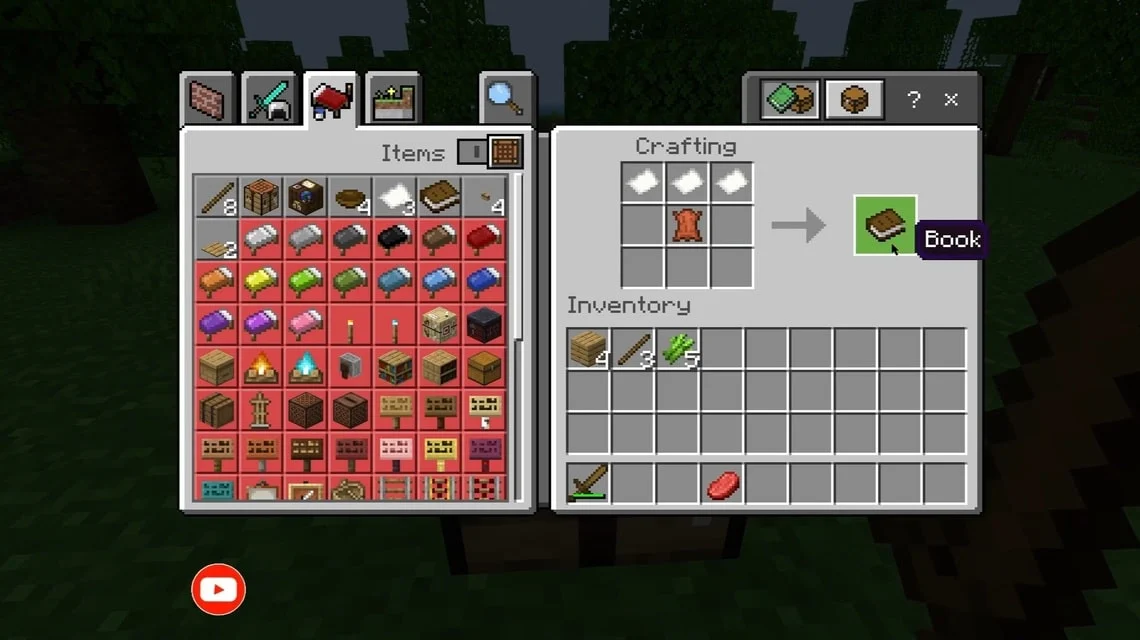
The book recipe combines three paper and one leather, a combination that unlocks bookshelves, enchanting tables, and writable books. Mastering this simple formula accelerates progression in survival mode.
Paper originates from sugar cane, a plant that thrives beside water bodies such as rivers, lakes, and coastlines. Collecting at least three stalks provides the raw material for the first component.
To turn sugar cane into paper, players place the three stalks horizontally in a crafting grid. The output yields three paper items ready for the next stage.
Leather is harvested from domesticated or wild animals like cows, horses, llamas, and donkeys. Killing or shearing these mobs drops one unit of leather per encounter.
Cows are the most reliable source for beginners, prompting many players to establish small farms. A steady leather supply ensures uninterrupted book production.
Once paper and leather are in inventory, the crafting process requires a standard 3×3 crafting table. Players arrange the three paper in any row and place the leather in an adjacent slot.
The resulting book appears in the result box and can be moved to the player’s inventory. Each crafting cycle produces a single book suitable for multiple uses.
Books serve as core components for bookshelves, which enhance enchantment levels when placed near an enchanting table. Without books, players cannot maximize enchantment potency.
Enchanting tables themselves require a book as part of their construction, alongside obsidian and diamonds. This makes the book a prerequisite for tool and armor upgrades.
The book and quill item allows players to write custom notes, stories, or maps within the game world. Creative users often employ this feature for role‑playing or documentation.
Villager librarians trade books and bookshelves for emeralds or enchanted books, creating an economic loop for advanced players. Accessing these trades can supplement a player’s inventory without additional farming.
Efficient book production hinges on early resource planning. Players who establish sugar cane farms near their base reduce travel time and increase output.
A simple sugar cane farm consists of rows of water channels flanked by sand or dirt blocks. Planting cane on these blocks yields rapid growth, especially under favorable light conditions.
Leather acquisition can be optimized by breeding cows, which produces calves that mature into adult sources. A modest herd can generate several leather pieces per day.
Some players prefer to explore villages for existing bookshelves, which can be broken and collected using appropriate tools. This method offers a quick boost without extensive farming.
Trading with librarian villagers remains a popular shortcut, especially when players have surplus emeralds. Librarians often stock multiple books, reducing the need for self‑crafting.
The guide emphasizes that the recipe does not require a specific arrangement, allowing flexibility in crowded crafting grids. This simplifies the process for newcomers still mastering inventory management.
Early mastery of book crafting also prepares players for later content such as written books, which can store complex command blocks. Understanding the basics prevents confusion when encountering advanced mechanics.
Game updates have not altered the fundamental book recipe, ensuring consistency across versions. Players can rely on the same steps regardless of platform.
Community forums frequently share tips for automating paper production with redstone mechanisms. While beyond the scope of a beginner guide, these innovations demonstrate the depth of Minecraft’s crafting system.
In summary, the three‑paper‑plus‑leather formula unlocks a suite of gameplay possibilities. It remains one of the most valuable early-game achievements.
Experts suggest pairing book crafting with simultaneous exploration of nearby biomes to gather both sugar cane and livestock. This multitasking approach maximizes efficiency.
For players on multiplayer servers, sharing surplus books can foster cooperative enchantment rooms. Collaboration often leads to faster overall progression for the group.
The tutorial’s step‑by‑step nature aligns with Minecraft’s educational appeal, teaching resource gathering, crafting, and strategic planning. These skills translate to broader problem‑solving abilities.
Developers continue to support the book mechanic as a cornerstone of the game’s progression system. Its simplicity encourages new players while offering depth for veterans.
As Minecraft’s community expands, tutorials like this remain essential for onboarding fresh audiences. Clear instructions help maintain the game’s accessibility.
Readers are encouraged to experiment with farm layouts and animal breeding to personalize their production pipelines. Tailoring methods to individual playstyles enhances enjoyment.
Ultimately, a well‑stocked inventory of books enables players to construct enchanting setups, write in‑game literature, and engage with villagers. Mastery of this craft marks a milestone in survival gameplay.
The straightforward recipe, combined with strategic gathering, ensures that even novice players can quickly access advanced features and enrich their Minecraft experience.
Artikel ini dipublikasikan oleh Media Kampung.






Tinggalkan Balasan