

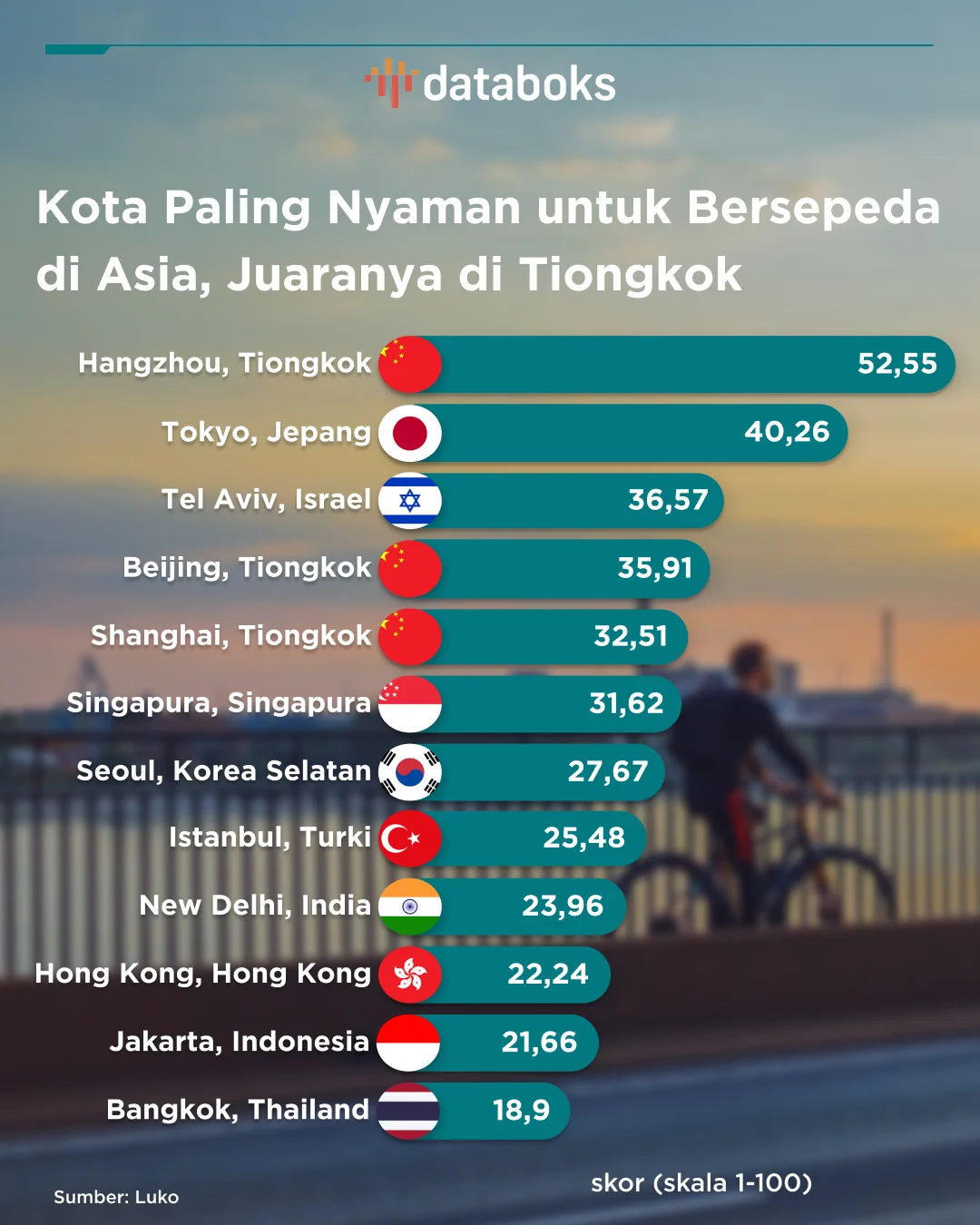
Media Kampung – 26 Maret 2026 | Chinese municipal governments are integrating cycling into urban development plans to reduce congestion and emissions. The new policies target expansion of bike lanes and support for shared bicycles.
The central government has allocated funds for constructing dedicated cycling corridors in major cities such as Shanghai, Beijing, and Chengdu. These corridors link residential areas with business districts and public transport hubs.
Local authorities are also deploying smart traffic management systems that prioritize cyclists at intersections. Sensors and AI algorithms adjust signal timing to create safe crossing windows.
The adoption of artificial intelligence mirrors recent projects in other metropolises where AI analyzes green space distribution. A study by Northeastern University demonstrated how AI can process satellite and street‑level images to map urban vegetation in three dimensions.
City planners in China cite the American example as proof that data‑driven tools can improve the efficiency of infrastructure maintenance. By combining aerial and ground‑level data, officials can identify gaps in cycling networks and plan expansions more accurately.
In addition to physical infrastructure, municipalities are incentivizing bike ownership through subsidies and tax rebates. Residents who purchase electric or conventional bicycles receive up to 30 percent discount on registration fees.
The subsidy scheme is complemented by a regulatory framework that limits the number of motorized vehicles in central zones. Vehicles exceeding emissions standards face higher parking fees and restricted entry during peak hours.
Surveys conducted by the Ministry of Transport indicate that daily bicycle trips have risen by 18 percent since the policy rollout in early 2025. The increase is most pronounced among commuters aged 20‑40 who value speed and cost savings.
Experts warn that infrastructure alone cannot guarantee safety without proper education. The Beijing Cycling Association has launched community workshops to teach traffic rules and defensive riding techniques.
Data from the workshops show a decline in cyclist‑related accidents by 12 percent in districts where training was mandatory. Officials plan to expand the program to secondary cities by the end of the year.
Urban green spaces are also being integrated with cycling routes to enhance air quality and provide pleasant scenery. New parks in Guangzhou feature looped bike paths that connect to existing transit stations.
The integration of green corridors and bike lanes reflects a broader shift toward sustainable mobility in Chinese cities. Planners argue that the combined effect reduces urban heat islands and encourages healthier lifestyles.
International observers note that China’s coordinated approach could serve as a model for other rapidly urbanizing nations. The alignment of technology, policy, and community engagement creates a replicable framework for low‑carbon transport.
As the next phase of the plan unfolds, authorities will monitor usage patterns through real‑time data platforms. The goal is to reach a 25 percent share of trips made by bicycle by 2030, supporting national climate targets.
The government also encourages private sector participation by granting permits for bike‑sharing operators that meet safety standards. Companies that integrate AI‑based fleet management are prioritized for public contracts.
Artikel ini dipublikasikan oleh Media Kampung.







Tinggalkan Balasan