

Media Kampung – 26 Maret 2026 | The post‑Lebaran return flow within PT Kereta Api Indonesia’s Daerah Operasi 7 Madiun has risen sharply, with cumulative departing passengers recorded at 142,628 individuals as of 25 March 2026 across its network of stations spanning East Java. This milestone exceeds typical seasonal benchmarks and signals a robust continuation of travel demand throughout the region.
In the same timeframe, inbound travelers reached 186,713, illustrating a stronger pull of passengers returning to their hometowns and workplaces after the holiday. The notable gap between outbound and inbound figures highlights the lingering attractiveness of rail travel during the H+3 phase of Lebaran.
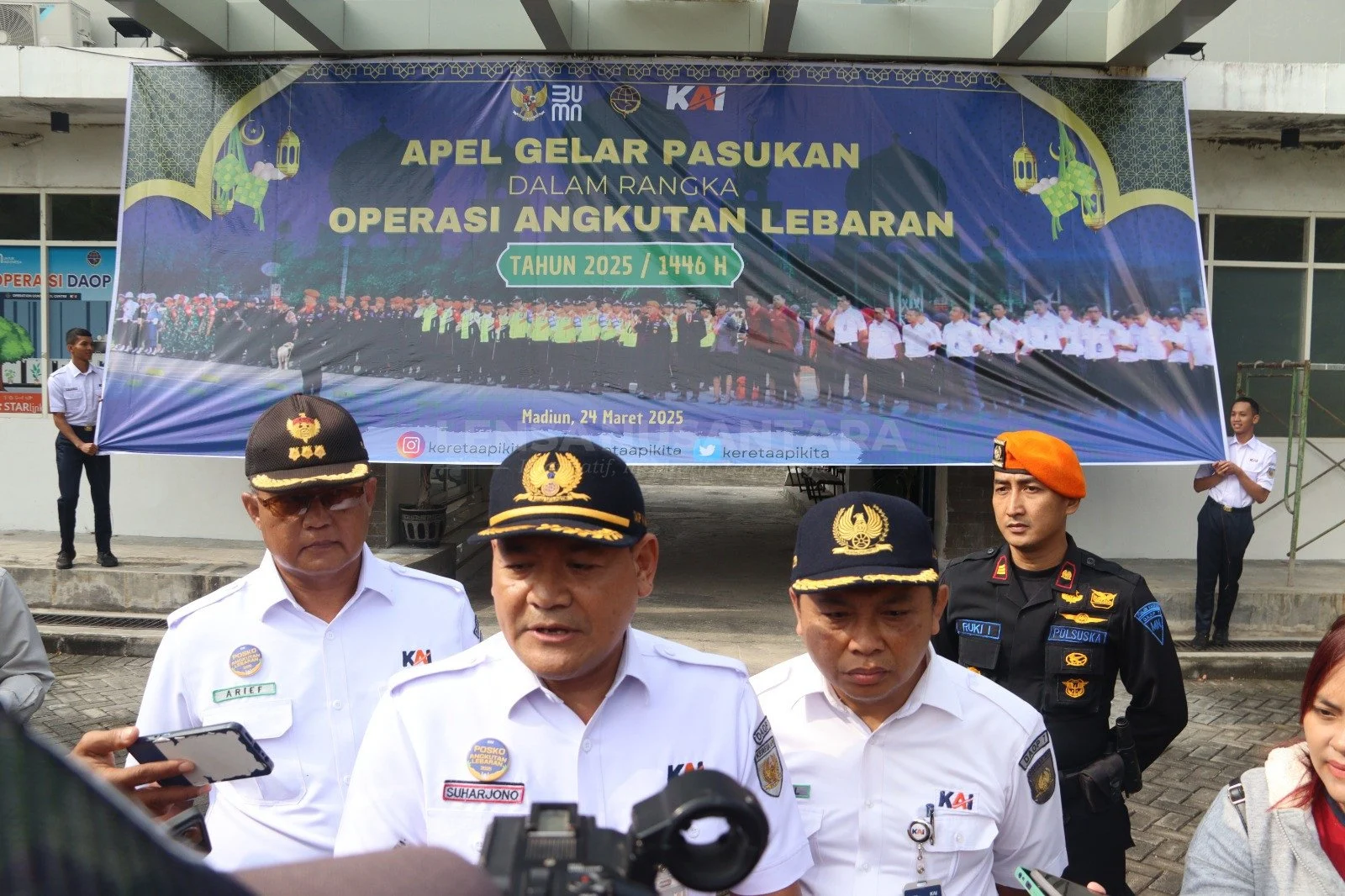
Daop 7 Madiun’s public relations manager, Tohari, explained that the surge reflects both the cultural impulse to reunite with family and the practical advantage of trains over road transport on congested corridors. He emphasized that passenger volumes remain high for both departures and arrivals despite the approaching end of the festive period.
On the reporting day, 13,251 passengers boarded trains from stations within the Daop 7 network, while 9,795 passengers arrived from other regions, contributing to a daily movement that rivals peak weekday traffic. These numbers are expected to increase further as evening commuters complete their journeys before the holiday fully concludes.
Tohari forecasted that the upward trend will likely persist for several more days, aligning with historical post‑Lebaran travel patterns observed in East Java. He warned that the railway operator must stay vigilant to manage the growing load on services and infrastructure.
In response, PT Kereta Api Indonesia has deployed additional train sets and raised service frequency on key routes throughout the Lebaran transport period, aiming to alleviate congestion and preserve punctuality. The supplementary operations are coordinated with station staff to ensure smooth boarding and alighting processes.
Authorities also issued a safety advisory urging the public to exercise heightened caution at level crossings, especially where road traffic intersects railway lines. Pedestrians and drivers are reminded to give way to passing trains and refrain from breaching crossing barriers.
The safety reminder follows several incidents nationwide where improper crossing behavior caused near‑misses and temporary service disruptions. By reinforcing compliance, the railway operator hopes to prevent accidents that could further strain the already busy network.
Economic observers note that the surge in railway patronage contributes positively to regional mobility and can stimulate local economies through increased passenger spending on ancillary services. The data also underscores the importance of rail as a cost‑effective alternative to road transport during peak periods.
Meanwhile, KAI’s operational team monitors ticket sales and train occupancy in real time, enabling dynamic adjustments of capacity where demand spikes unexpectedly. This data‑driven approach allows rapid deployment of extra coaches to maintain service quality.
Community leaders in Madiun have expressed appreciation for the reliable service, citing that many families rely on trains to reunite during the festive season. Their feedback reinforces the railway’s role as a vital public service in East Java.
Transport analysts point out that the continued high passenger numbers may influence future planning decisions, such as the allocation of new rolling stock and the upgrade of station facilities in the Daop 7 area. Strategic investments are expected to enhance resilience against similar demand surges.
In addition to operational measures, KAI has intensified public communication through social media channels, providing real‑time updates on train schedules and crowding levels. Effective information dissemination aims to guide passenger choices and distribute demand more evenly across available services.
Overall, the return flow after Lebaran continues to drive elevated passenger volumes in Daop 7 Madiun, with cumulative departures exceeding 142 thousand and arrivals nearing 187 thousand. The operator’s proactive steps and safety reminders aim to sustain smooth operations as the holiday period winds down.
As the post‑holiday travel window narrows, officials anticipate a gradual decline in passenger numbers but remain prepared to adjust resources should unexpected spikes occur. The coordinated effort between railway management, local authorities, and the traveling public underscores a collective commitment to safe and efficient mobility.
Artikel ini dipublikasikan oleh Media Kampung.







Tinggalkan Balasan