

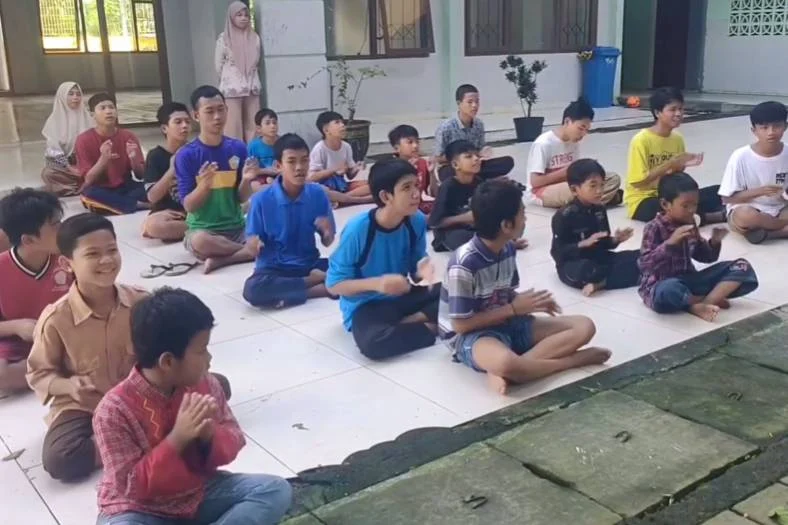
Media Kampung – 28 Maret 2026 | Surabaya’s municipal government has designated the Kampung Pancasila initiative as a priority program for the post‑Ramadan period of 2026, with support from the East Java Child Protection Agency (LPA Jatim). The move aims to embed child safeguarding within the fabric of neighbourhood life.
Isa Ansori, chair of LPA Jatim, said the program must move beyond a symbolic expression of unity and become a living system that detects and addresses children’s needs at the grassroots level. He emphasized that the success of Kampung Pancasila depends on clear orchestration and community involvement.
According to Isa, protecting children cannot rely solely on government directives; it requires active participation from residents who share the same streets and public spaces. He called for a structured collaboration framework between the city administration and the local populace.
One concrete proposal from LPA Jatim is the establishment of a Child Protection Task Force at the RT (neighbourhood) level, tentatively named the Sistem Perlindungan Anak Tingkat RT (SPARTA). The task force would act as the eyes and ears of the municipal authorities within each block.
Isa explained that SPARTA would not be a mere forum but a functional unit that conducts early detection of child‑related issues, maps family and environmental conditions, and formulates intervention plans. The unit would also channel identified problems to the relevant city agencies for timely solutions.
By operating at the RT level, the task force can bridge the long‑standing gap between policy formulation and on‑the‑ground realities, according to the LPA representative. This proximity ensures that no child falls through the cracks of the formal protection system.
The proposed model leverages existing kearifan lokal, such as mutual aid, social empathy, and neighbourly vigilance, which have long functioned as informal safety nets in Surabaya’s kampungs. Formalising these practices under the Kampung Pancasila banner is intended to create a sustainable protection ecosystem.
Isa highlighted that Surabaya does not need to import external frameworks because the city already possesses strong communal bonds, a culture of collective responsibility, and a shared sense of national values. The Kampung Pancasila initiative is positioned to amplify these intrinsic strengths.
The LPA also stressed that the child protection approach must be inclusive, covering every child residing in Surabaya regardless of administrative origin or socioeconomic status. Equal access to protection services is framed as a core principle of the program.
In addition to SPARTA, the municipal government plans to integrate the task force’s data into city‑wide monitoring systems, enabling rapid response by health, education, and social welfare departments. This integration is expected to streamline resource allocation and avoid duplication of effort.
Isa warned that without coordinated action, isolated interventions risk becoming fragmented and ineffective. He urged the mayor’s office to provide clear guidelines, training, and logistical support for RT volunteers.
The mayor, Eri Cahyadi, has reportedly endorsed the idea of a village‑level protection network, viewing it as a natural extension of the Kampung Pancasila philosophy that promotes solidarity and civic participation. His administration is preparing a budget line for the pilot phase in selected neighbourhoods.
Community leaders in several districts have already expressed willingness to host SPARTA meetings, citing their familiarity with local families and willingness to act as first responders. These leaders anticipate that regular dialogues will improve trust between citizens and authorities.
Critics caution that volunteer‑based models may face sustainability challenges if incentives and capacity‑building are insufficient. LPA Jatim acknowledges this risk and proposes periodic evaluation and refresher trainings to maintain effectiveness.
The initiative also aligns with national child protection guidelines, which call for multi‑sectoral collaboration and community‑based monitoring. By embedding these standards at the RT level, Surabaya hopes to set a benchmark for other Indonesian cities.
Early pilot activities are scheduled to begin in March 2026, with an initial cohort of twenty RTs across the eastern and western corridors of the city. The outcomes of this pilot will inform a city‑wide rollout later in the year.
If successful, the Kampung Pancasila‑SPARTA model could transform Surabaya into a ‘child‑friendly city’ where safety is monitored daily by neighbours rather than solely by distant agencies. The LPA expects measurable reductions in reports of neglect and abuse within the first year.
The collaboration between LPA Jatim, the Surabaya municipal government, and local residents reflects a broader shift toward community‑driven governance, aiming to ensure that every child grows up protected, heard, and supported. The program’s progress will be publicly reported to maintain transparency and accountability.
Artikel ini dipublikasikan oleh Media Kampung.





Tinggalkan Balasan