

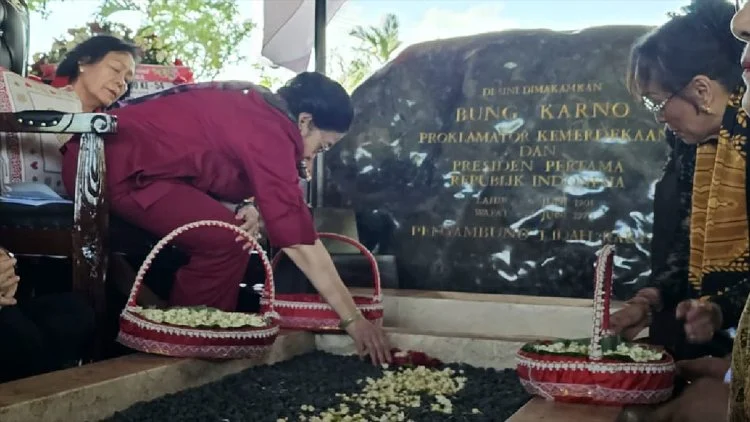
Media Kampung – 30 Maret 2026 | On Sunday 29 March 2026, Megawati Soekarnoputri, chairperson of PDIP, visited the grave of her father Sukarno in Blitar, East Java. The visit was publicly documented through photographs and video.
She arrived at the Makam Bung Karno complex accompanied by members of her family, including her sister Sukmawati, brother Guruh, niece Puti Guntur, and cousin Romy Soekarno. Their presence underscored the personal nature of the pilgrimage.
According to PDIP spokesperson Guntur Romli, the delegation also included senior party figures. He listed Bintang Puspayoga, the DPP chair, and Hasto Kristiyanto, the DPP secretary-general, among the escorts.
Jakarta Governor Pramono Anung was visibly present, walking side by side with Megawati as they descended the steps toward the tomb. His involvement highlighted the coordination between the party and the regional government.
Local residents gathered in large numbers around the tomb area to witness the event. Several individuals approached the former president to exchange greetings, reflecting the enduring respect for Sukarno.
Upon reaching the gravesite, Megawati placed a bouquet of white flowers on the tomb. The gesture was performed in silence and was followed by a brief moment of reflection.
The visit coincided with a period of heightened political activity ahead of the 2026 regional elections. Analysts note that Megawati’s appearance may reinforce the legacy narrative of the founding father within PDIP’s campaign.
Observers also pointed out that the inclusion of Pramono Anung, a governor from the capital, could signal an attempt to project national unity. The governor has previously collaborated with PDIP on urban development projects.
Hasto Kristiyanto, who serves as the party’s secretary-general, remained close to Megawati throughout the ceremony. His role is often seen as a logistical coordinator for high‑profile party events.
Bintang Puspayoga, who leads the DPP, stood beside the tomb after the flower offering. He later addressed the gathered crowd, emphasizing Sukarno’s ideals of independence and social justice.
The family members accompanying Megawati expressed personal emotions but refrained from public commentary. Their participation was limited to the ceremonial aspects of the visit.
Security personnel from the national police and the presidential guard ensured the area remained orderly. No incidents were reported during the hour‑long event.
The Makam Bung Karno site is managed by the Ministry of Culture and Tourism, which reported an increase in visitor numbers during the weekend. The ministry noted the site’s importance as a national heritage landmark.
Historical context ties the location to Sukarno’s final years, as he was buried there following his death in 1970. The tomb has become a pilgrimage destination for supporters of the nationalist ideology.
Megawati’s visit underscores the symbolic link between the current party leadership and the founding generation of Indonesia. It reinforces the narrative that the party continues to uphold Sukarno’s principles.
Political commentators suggest that such symbolic acts may influence voter sentiment in East Java, a key battleground in upcoming elections. East Java’s electorate has traditionally shown strong support for PDIP.
The event received coverage from national media outlets, with photographs circulating on social platforms. The images displayed the solemn atmosphere and the presence of high‑ranking officials.
In summary, Megawati’s pilgrimage to Blitar served both personal remembrance and political signaling, combining family tribute with party solidarity in a public setting.
Artikel ini dipublikasikan oleh Media Kampung.






Tinggalkan Balasan