

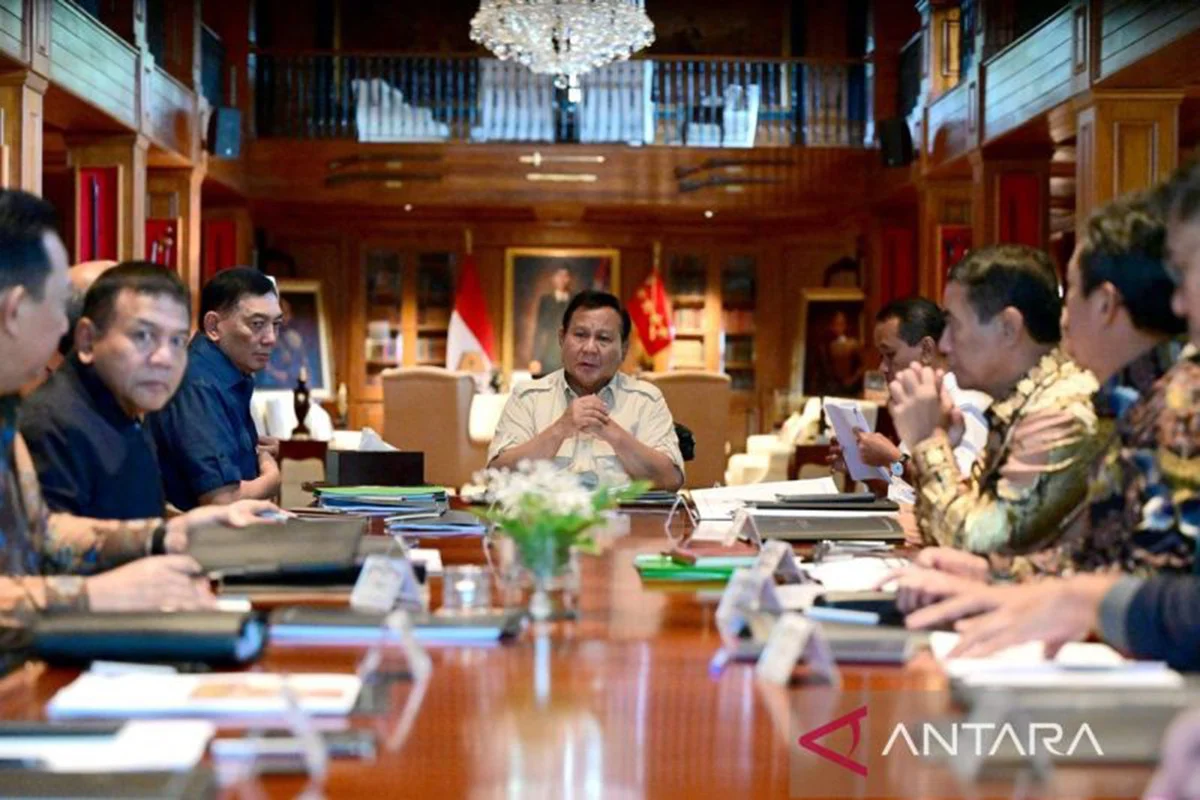
Media Kampung – 20 Maret 2026 | President Prabowo Subianto convened a round‑table discussion at his Hambalang residence on Tuesday night, 17 March 2026, to address pressing geopolitical and domestic policy issues. The gathering lasted until early Wednesday, concluding at 01:30 WIB.
The event was organized by the Government Communication Agency (Bakom) and coordinated by its head, Angga Raka Prabowo. He described the meeting as a platform for “deep dialogue” on national strategy.
Around a dozen journalists, analysts and specialists were invited, representing media, academia and the private sector. Among them were senior broadcaster Retno Pinasti, former presidential communication chief Hasan Nasbi, and economist Muhammad Chatib Basri.
Former Finance Minister Chatib Basri, now a Harvard lecturer, offered insights on Indonesia’s fiscal outlook amid volatile global markets. He stressed the need for prudent budgeting and investment in productive sectors.
Veteran journalist Najwa Shihab, founder of Narasi, highlighted the role of independent media in shaping public understanding of foreign affairs. She warned against misinformation that could distort policy choices.
Political commentator Rizal Mallarangeng, founder of Freedom Institute, discussed Indonesia’s strategic positioning in the Indo‑Pacific. He argued that balanced diplomacy with major powers is essential for safeguarding sovereignty.
Influencer and entrepreneur Mardigu Wowiek Prasantyo contributed a perspective on digital economy trends and youth engagement. He suggested that tech‑driven initiatives can boost national resilience.
Angga Raka Prabowo said the discussion was scheduled from 19.00 to 01.30 WIB and aimed to “build national optimism and accelerate transformation.” He added that the dialogue reflects the administration’s openness to diverse viewpoints.
President Prabowo reiterated his full commitment to strengthen synergy among all national elements. He urged participants to work together “hand‑in‑hand” for nation‑building.
The round‑table format placed the president centrally, flanked by the invited experts, allowing each to voice opinions directly. The setting fostered a candid exchange without formal agenda constraints.
Topics covered included the impact of the Russia‑Ukraine war on energy security, the rise of China’s Belt‑and‑Road influence, and Indonesia’s role in ASEAN cohesion. Participants examined how these factors affect Indonesia’s trade and defense policies.
Economic discussion focused on inflation trends, fiscal deficit reduction, and attracting foreign investment under the “Strategic Economic Roadmap.” Chatib Basri emphasized the importance of structural reforms.
On security, the panel noted increasing maritime disputes in the South China Sea and the need for stronger naval capabilities. Rizal Mallarangeng called for a balanced approach that combines deterrence with diplomatic outreach.
Media representatives raised concerns about press freedom and the spread of fake news in the digital era. Najwa Shihab advocated for transparent communication from government institutions.
The president responded by promising greater data sharing and regular briefings to the press. He said such measures would enhance accountability and public trust.
Observers noted that convening such a multi‑disciplinary forum is rare in recent Indonesian presidencies. It signals a shift toward more consultative governance.
Analysts anticipate that the outcomes of the Hambalang meeting will inform upcoming policy drafts on energy diversification and digital infrastructure. The government plans to issue a briefing paper within the week.
International partners have expressed interest in Indonesia’s stance on regional security. A statement from the Ministry of Foreign Affairs indicated readiness to coordinate with allies on common challenges.
Domestic reactions have been mixed; some political figures praise the inclusive approach, while critics question the tangible impact of the dialogue. Nevertheless, the event has generated significant media coverage.
Social media users shared snapshots of the discussion, highlighting the presence of well‑known personalities. The president’s official Instagram account posted a brief video summarizing the key points.
The Bakom spokesperson confirmed that the discussion will be followed by a series of thematic workshops involving civil society and industry groups. These will aim to translate ideas into actionable programs.
In conclusion, the Hambalang round‑table marked a concerted effort by the Prabowo administration to address complex geopolitical shifts while reinforcing domestic unity. The president’s call for collective effort remains central to the nation’s forward trajectory.
Artikel ini dipublikasikan oleh Media Kampung.


Tinggalkan Balasan