

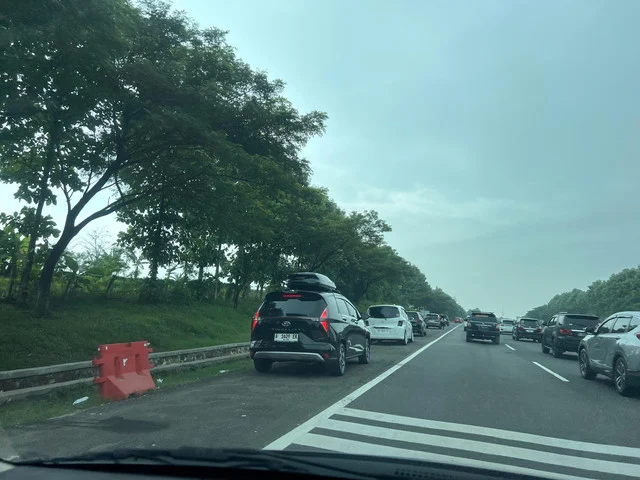
Media Kampung – 27 Maret 2026 | Heavy congestion on the return traffic of Tol Batang and Tol Cipali on March 26 was traced to vehicles stopping on the shoulder and at rest areas. The blockage created a chain reaction that slowed traffic along key segments of the Trans‑Jawa corridor.
At Tol Batang, congestion emerged at 10:00 WIB near Rest Area KM 389 as a surge of mudik cars tried to enter, forming a long queue. The inflow exceeded the capacity of the entry lane, causing the mainline flow to stall.
A similar jam developed at Rest Area KM 360, where the volume of returning travelers overwhelmed the parking area. Traffic resumed normal speed only after the vehicles cleared the rest area.
Between Kendal and Brebes, several drivers pulled over onto the shoulder, citing mechanical trouble or the need to rest. These ad‑hoc stops interrupted the continuous flow of the main carriageway.
Main‑lane drivers were forced to reduce speed to allow merging vehicles to re‑enter the roadway. The repeated speed reductions compounded the overall delay.
The bottleneck stretched up to KM 160, creating a prolonged stretch of slow traffic. Drivers reported travel times double the usual estimates.
Rest areas themselves became overcrowded, with restaurants, mosques, and parking bays filled to capacity. The surge strained auxiliary services such as sanitation.
At KM 360, the waiting time for a toilet reached up to 20 minutes, prompting frustration among travelers. Staff intervened to manage the line and advise alternative facilities.
Toll operators used loudspeakers to guide motorists toward usable restrooms and to warn against illegal parking on the shoulder. Their announcements helped restore order and partially eased the congestion.
On Tol Cipali, the return lane toward Jakarta experienced comparable density, with many vehicles stopping on the shoulder. The phenomenon mirrored the situation observed on Tol Batang.
Ardam Rafif Trisilo, head of Astra Tol Cipali’s sustainability department, identified driver fatigue and vehicle breakdowns as the main triggers. He urged travelers to avoid stopping on the shoulder for safety reasons.
Traffic data recorded between midnight and 08:00 showed approximately 21 000 vehicles passed the Cikopo gate toward Jakarta, 31 % lower than the previous day. The peak flow reached about 2 700 vehicles per hour.
In the opposite direction, only around 5 000 vehicles moved from Jakarta to Cirebon, marking a 27 % decline compared with the same time slot yesterday. The reduced volume reflected the impact of the emerging congestion.
Authorities warned that the combined slowdown could disrupt the planned mudik schedule and recommended the use of official rest areas instead of shoulder stops. Additional patrols were dispatched to enforce the guidance.
Officials continue to monitor traffic conditions and stand ready to deploy extra staff to manage queues and ensure safety. The situation is expected to improve as the peak return period wanes.
Artikel ini dipublikasikan oleh Media Kampung.







Tinggalkan Balasan