

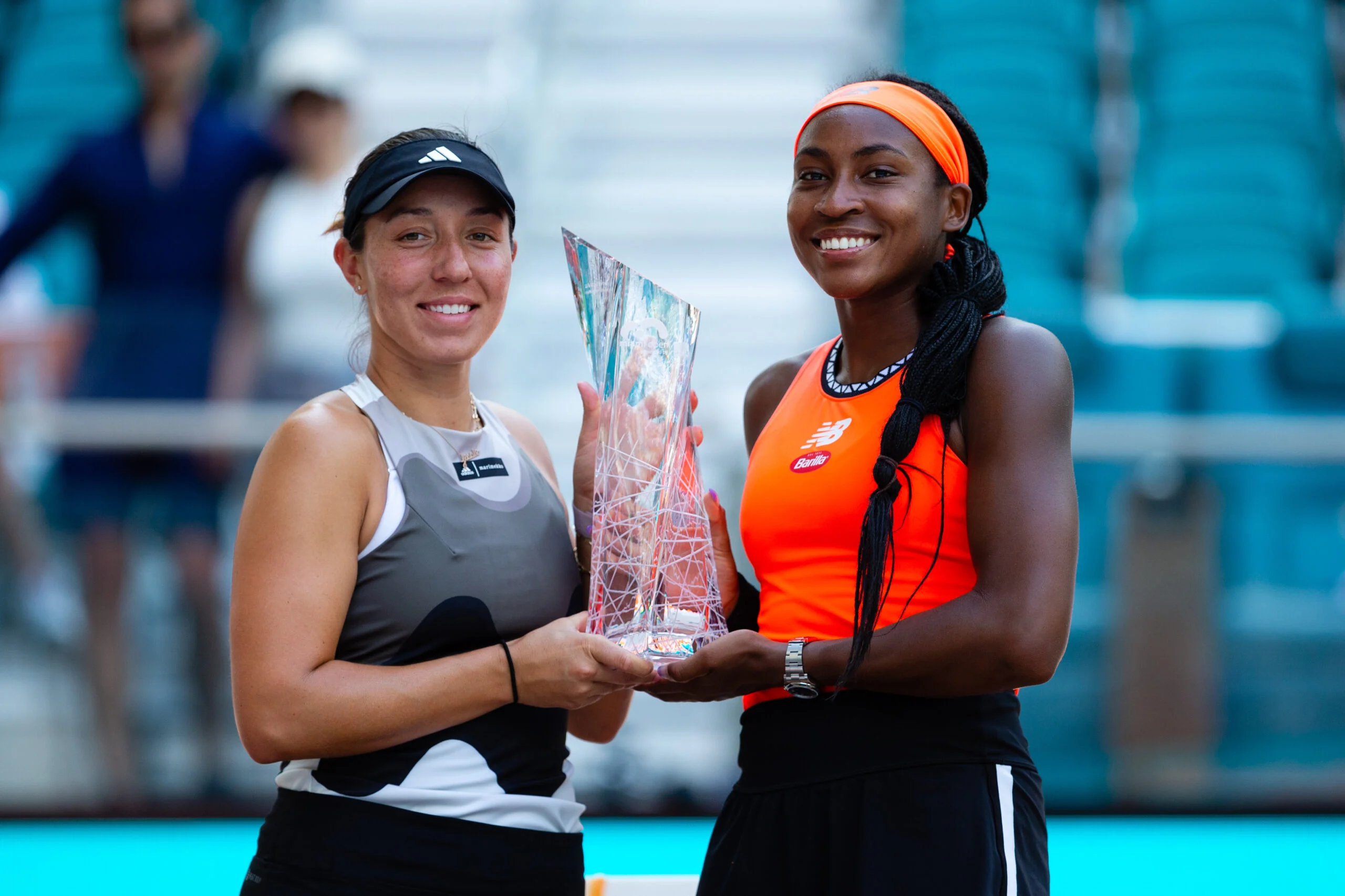
Media Kampung – 30 Maret 2026 | Coco Gauff concluded the Miami Open as runner‑up after a 6‑2 4‑6 6‑3 defeat to Aryna Sabalenka, marking her deepest run at her home tournament. The loss followed a week‑long recovery from an arm nerve issue that had forced her to retire early at Indian Wells.
Gauff admitted she frequently talks down on herself, yet the emotional surge after the final was sparked by admiration for figure‑skating champion Alysa Liu. She recalled Liu’s composure at the Winter Olympics as a model for staying grateful despite defeat.
During the brief speech, Gauff said the tears she shed were of gratitude rather than disappointment. She highlighted the support of family and fans in the Hard Rock Stadium as a source of strength.
The American entered Miami with low expectations, having considered skipping the event to allow her arm to heal. Her decision to compete paid off as she advanced past the fourth round for the first time in her career.
Coach and team members noted that Gauff’s preparation was limited by rain‑delayed sessions and the lingering injury. Nevertheless, she relied on years of training and instinct to navigate the draw.
Sabalenka, the world No. 1, secured the Sunshine Double by defending her Miami title and winning Indian Wells earlier in the season. She later addressed a disruptive fan and a noisy incident involving Gauff’s brother during the final.
According to former Wimbledon champion Marion Bartoli, Sabalenka directed an angry look toward the Gauff family box, suspecting one of the brothers of being too loud. The incident escalated when a spectator shouted “out” mid‑rally, prompting Sabalenka to issue a profanity‑filled reprimand.
Sabalenka subsequently apologized for her outburst, describing the fan’s behaviour as unacceptable and acknowledging her own loss of temper. She also praised Gauff, calling her a fierce competitor who pushes her to improve.
Gauff’s brother, who sits in the player’s box, became a focal point of media scrutiny after the match. Both players and officials affirmed that the noise did not affect the outcome of the points.
In her interview, Gauff reflected on the mental shift required after a final loss, emphasizing learning over lingering regret. She said she will use the experience to aim for a future title in Miami.
The American’s acknowledgment of self‑criticism aligns with a broader trend among elite athletes who monitor internal dialogue. Sports psychologists note that recognizing gratitude can mitigate the negative effects of perfectionism.
Gauff’s reference to Alysa Liu underscores cross‑sport inspiration, as Liu’s Olympic performance demonstrated poise under pressure. Gauff stated that Liu’s mindset helped her reframe the loss as a step forward.
Sabalenka’s victory also featured a rare code violation for audible obscenity, a sanction seldom applied at high‑level tournaments. The penalty did not alter the match result but highlighted the intensity of the final.
Tournament officials confirmed that both players adhered to conduct guidelines after the incident, and no further disciplinary action was taken. The Miami Open organizers praised the sportsmanship displayed by Gauff despite the emotional moment.
Gauff’s performance boosted her ranking points, keeping her within the top five of the WTA standings. Analysts predict that the confidence gained from reaching the final will translate into stronger showings at upcoming Grand Slams.
Sabalenka, meanwhile, expressed satisfaction with retaining her Miami crown and achieving the Sunshine Double for the second consecutive year. She highlighted the quality of competition as a motivator for continued improvement.
The Miami Open, part of the mandatory WTA 1000 series, draws global attention each March, and this year’s final added a narrative of rivalry and resilience. Fans praised the high‑level tennis and the emotional authenticity displayed by both athletes.
Gauff’s candid admission of self‑talk and her gratitude‑focused mindset may influence younger players facing similar pressures. Coaches are likely to incorporate her example when teaching mental toughness.
Sabalenka’s apology and respectful remarks toward Gauff reinforce a growing culture of mutual respect among top competitors. The incident serves as a reminder that on‑court tension can be managed without compromising professionalism.
Overall, the Miami Open final highlighted both the physical challenges and the psychological battles inherent in elite tennis, leaving both players poised for future success. The tournament concluded with anticipation for next season’s matchups.
Artikel ini dipublikasikan oleh Media Kampung.







Tinggalkan Balasan