

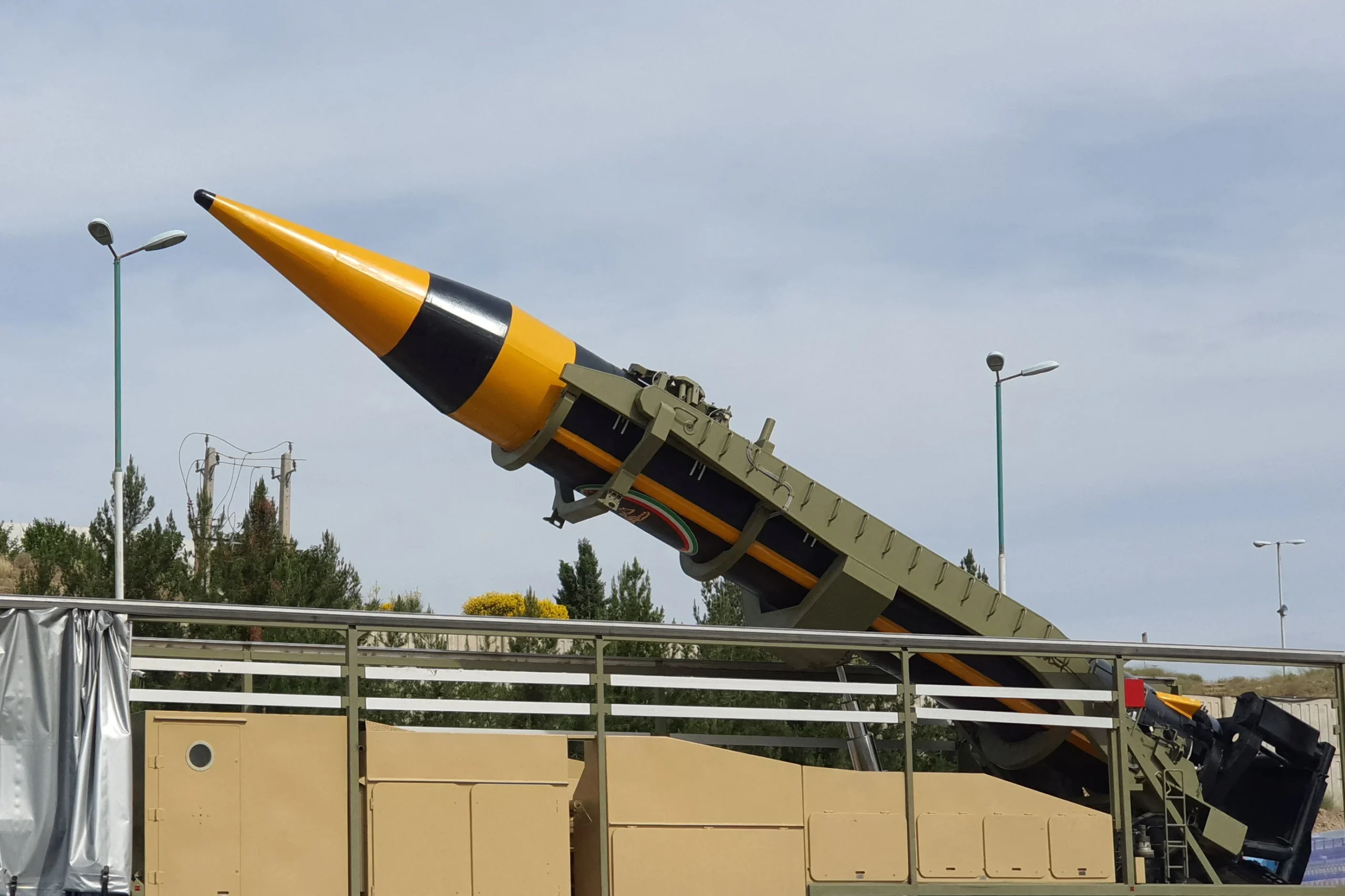
Media Kampung – 24 Maret 2026 | Iran fired two medium-range ballistic missiles at Diego Garcia on 21 March 2026, the U.S.-U.K. joint base in the Indian Ocean, but both were intercepted before reaching the target. The incident drew immediate attention from regional and global security analysts.
One missile was destroyed in mid‑air by an American defense system, while the second was shot down by the same network, preventing any damage or casualties. Officials confirmed the base continued normal operations after the interception.
Iranian officials, speaking through the Islamic Revolutionary Guard Corps, claimed the missiles, identified as Fattah‑2, reached a range of 2,500 km and struck the island, asserting a 90 % accuracy rate despite tropical weather. The statements were relayed by Al Jazeera and have not been independently verified.
U.S. Defense Secretary Pete Hegseth denied any impact, stating that all projectiles were neutralised well before reaching Diego Garcia and that the base remained fully functional. The Pentagon emphasized that the interception demonstrated the effectiveness of existing missile defenses.
Analysts note that the choice of Diego Garcia, a remote logistics hub located over 3,900 km from Iran, signals a shift in Tehran’s strategic messaging rather than a conventional attempt to destroy the facility. The missiles’ failure does not diminish the symbolic value of the test.
Diego Garcia serves as a key forward operating location for B‑52 bombers, B‑1B aircraft and naval assets, supporting U.S. operations across the Middle East, Africa and the Indo‑Pacific. Its isolation has traditionally been considered a natural shield against direct attack.
By launching missiles that could theoretically reach the base, Iran challenged the long‑standing assumption that distance alone guarantees security for overseas installations. The episode suggests a new “reach‑ability” doctrine in Tehran’s military planning.
The incident also arrives at a moment when the United Kingdom is preparing to announce a policy that may expand the use of Diego Garcia for allied operations, potentially increasing the base’s strategic profile. Iran’s timing appears intended to draw attention to that development.
Security experts warn that even a single intercepted launch forces the United States to allocate costly assets—interceptors, radar coverage and patrol vessels—to protect a single point. Over time, the financial burden of such continuous vigilance could erode strategic advantages.
“The cost of keeping a shield up around every remote base is unsustainable,” said Fauzan Luthsa, a Eurasian geopolitics analyst, referencing the recent missile test. He argues that Iran’s aim is to create persistent uncertainty rather than to inflict physical damage.
The broader implication is a possible redrawing of the “red line” that has historically prevented adversaries from targeting U.S. assets outside the Middle East. Iran’s demonstration, albeit unsuccessful, may encourage other regional actors to reassess their own reach capabilities.
The United States has not announced any retaliatory strike, opting instead to reinforce defensive measures at Diego Garcia and nearby maritime corridors. This measured response reflects a strategic calculus aimed at avoiding escalation while maintaining deterrence.
Meanwhile, Israeli officials have denied involvement in the attack, despite speculation that the incident could be a false‑flag operation designed to justify further action against Iran. No evidence linking Israel to the missile launch has emerged.
Independent satellite imagery and commercial monitoring services have yet to confirm the launch or any debris, leaving the international community reliant on official statements from the involved parties. Verification remains a critical step for accurate assessment.
The episode underscores the evolving nature of modern warfare, where a single missile test can reshape strategic calculations across continents. As Iran continues to demonstrate long‑range capabilities, the security architecture surrounding overseas bases will likely undergo further scrutiny.
In conclusion, the failed missile strike highlighted both Iran’s willingness to project power at great distances and the challenges faced by the United States in protecting a dispersed global footprint. The situation remains fluid, and policymakers will watch closely for any next moves.
Artikel ini dipublikasikan oleh Media Kampung.





Tinggalkan Balasan