

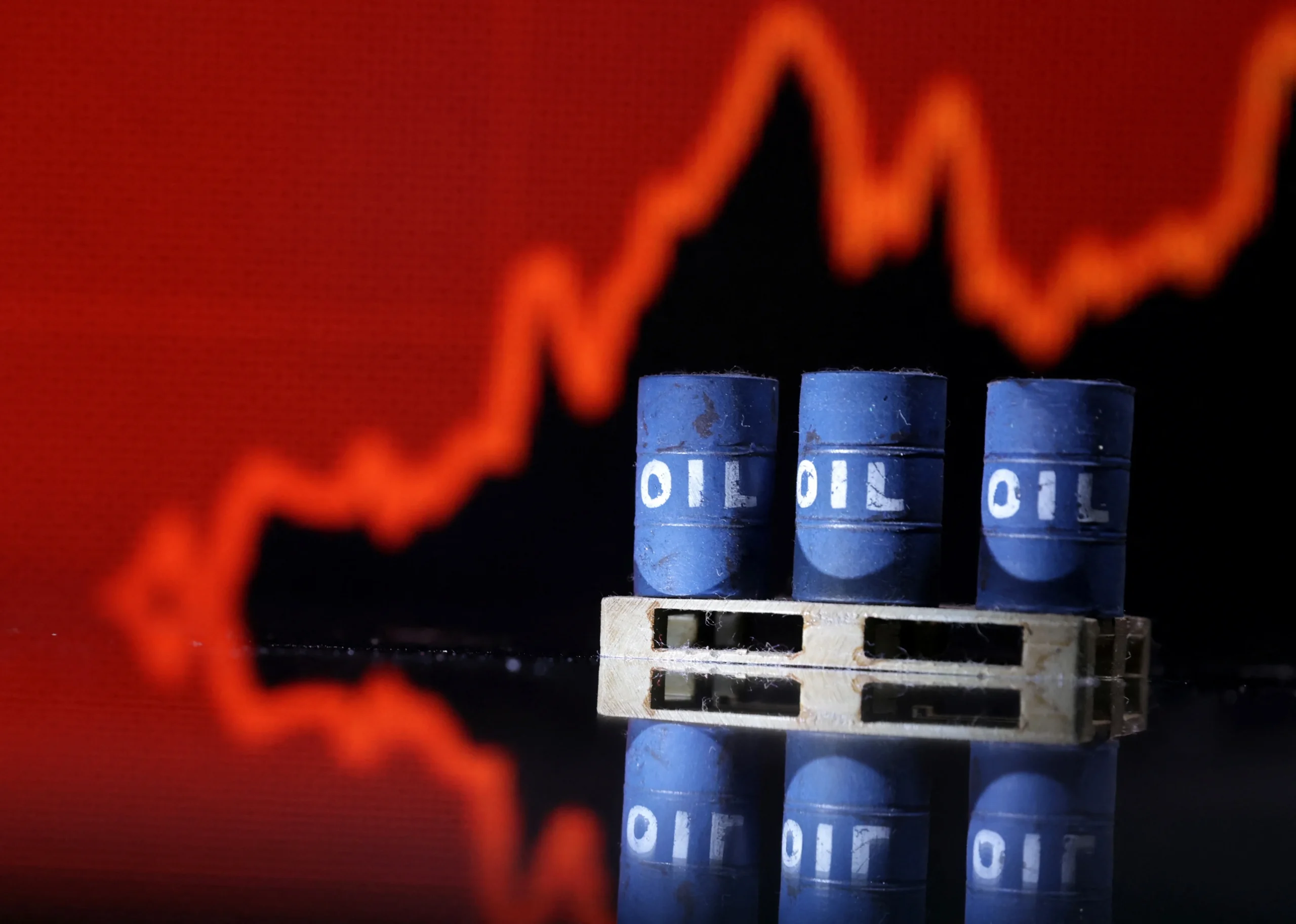
Media Kampung – 21 Maret 2026 | Global oil inventories are tightening, pushing benchmark prices to multi‑year highs after Iran‘s recent aggression in the Persian Gulf.
On March 20 Iraq declared a force majeure on all foreign‑operated fields, citing an inability to ship crude through the Strait of Hormuz where tanker traffic has collapsed following Iranian attacks.
The disruption lifted Brent crude to $112.19 a barrel, up 3.26%, while U.S. West Texas Intermediate rose to $98.32, a gain of 2.27%.
Iranian drones also struck Kuwait’s Mina Al‑Ahmadi and Mina Abdullah refineries, igniting fires and forcing a temporary shutdown of several units.
Kuwait Petroleum Corporation confirmed the damage and said production at the affected plants would resume only after safety inspections.
Saudi oil officials warned that continued hostilities could push crude prices above $180 per barrel by the end of April if supply cuts persist.
“If the conflict escalates, the market will face a severe shortage,” said a senior Saudi Energy Ministry spokesperson, adding that regional output already operates near capacity.
The United States signaled a possible policy shift, with Treasury Deputy Assistant Secretary Scott Bessent indicating Washington may lift sanctions on about 140 million barrels of Iranian crude held on tankers.
“Releasing the cargo would ease immediate pressure on global markets without rewarding aggression,” Bessent told Fox Business.
Analysts at Citi project that Brent could trade between $115 and $125 in the next fortnight, but caution that any further strikes on shipping lanes would invalidate the outlook.
OPEC+ has not announced additional production cuts, leaving the market reliant on existing buffers that have already been drawn down to historic lows.
Data from the International Energy Agency shows world crude inventories fell by roughly 6 million barrels in the past month, the steepest weekly decline since 2020.
The reduction reflects both higher demand from recovering economies and the loss of transit capacity through the Hormuz chokepoint.
Shipping companies report that several vessels have rerouted around the Cape of Good Hope, adding weeks to delivery times and increasing freight costs.
The cumulative effect of the supply shock, higher freight, and speculative buying has raised concerns about inflationary pressure in oil‑importing nations.
Economists warn that sustained high oil prices could dampen growth forecasts for emerging markets that depend heavily on energy imports.
Governments in Europe and Asia are monitoring the situation closely and may consider strategic reserve releases if prices breach critical thresholds.
For now, markets remain volatile, with traders adjusting positions as new intelligence on military actions emerges.
The episode underscores the fragility of global energy security when geopolitical tensions intersect with already constrained stockpiles.
Overall, the combination of Iraq’s force majeure, Iranian attacks, and potential US policy changes has created a perfect storm that keeps oil prices on an upward trajectory.
Artikel ini dipublikasikan oleh Media Kampung.







Tinggalkan Balasan