

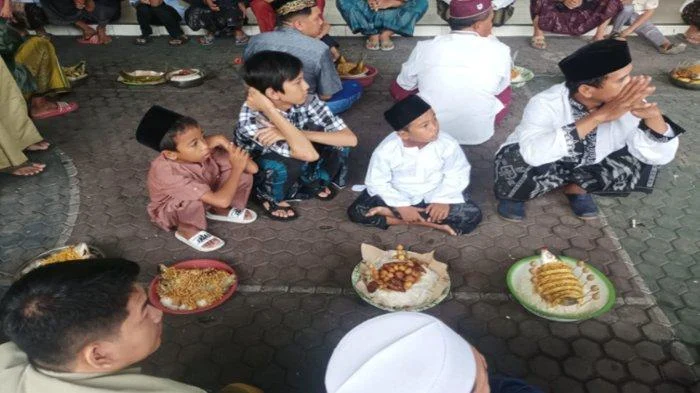
Media Kampung – 22 Maret 2026 | The Regency of Gresik in East Java revived one of its most emblematic post‑Ramadan customs this year, the Ambengan ceremony, which centers on a communal feast featuring a giant milkfish. The event, held on the first Friday after Eid al‑Fitr, attracted thousands of residents and visitors.
Ambengan, derived from the Javanese word “mbangun” meaning “to build”, historically marks the end of the fasting month and serves as a collective expression of gratitude for the season’s blessings. Local officials describe it as both a religious observance and a cultural showcase.
The focal point of the celebration is a massive bandeng (milkfish) that can weigh up to 50 kilograms, prepared according to a secret family recipe that has been handed down for generations. The fish is seasoned, steamed, and later served on large banana leaves.
According to the head of the Gresik Cultural Office, H. Ahmad Fauzi, the bandeng symbolizes prosperity and the hope for abundant harvests in the coming agricultural cycle. He added that the size of the fish reflects the community’s collective aspiration for growth.
Preparations for the giant fish begin weeks in advance, with local fishermen coordinating the catch from the nearby Java Sea. The fish is transported in insulated containers to the town square, where it is displayed before the cooking ceremony.
The cooking process is a public performance; a team of seasoned cooks, led by veteran chef Ibu Siti, arranges the fish on a giant charcoal grill while chanting traditional prayers. The aroma of the steaming fish draws crowds to the perimeter of the square.
Once cooked, the bandeng is cut into portions and distributed to attendees through a system of communal trays, ensuring that every participant receives an equal share. The distribution is overseen by volunteers from the local youth organization.
The ceremony also includes traditional music performed by a gamelan ensemble, and dancers wearing batik costumes reenact historic agrarian rituals. These artistic elements reinforce the link between the feast and the region’s agrarian heritage.
Local vendors set up stalls offering complementary dishes such as urap, tempeh, and fried tofu, as well as sweet snacks like klepon and getuk. The market atmosphere adds an economic dimension to the cultural event.
The Gresik Regency Government estimates that the Ambengan ceremony generates approximately 1.2 billion rupiah in revenue for small businesses each year. This figure underscores the event’s role as a catalyst for the local economy.
Residents describe the Ambengan as an opportunity to strengthen communal bonds after a month of individual fasting. “We share the same plate, we share the same hope,” said 45‑year‑old participant Rini Widiastuti.
Religious scholars present at the event emphasize that the gratitude expressed through the feast aligns with the teachings of Islam, which encourage sharing surplus with neighbors and the less fortunate. The ceremony therefore fulfills both spiritual and social obligations.
In recent years, the Gresik administration has incorporated environmental considerations, urging fishermen to practice sustainable harvesting of milkfish. The government also promotes the use of biodegradable plates and utensils during the celebration.
The Ambengan tradition, first documented in colonial archives from the early 1900s, has undergone several transformations but has retained its core purpose of communal thanksgiving. Researchers note that the ritual reflects the syncretic nature of Javanese culture.
Schoolchildren from nearby elementary schools participated in a “cultural walk” that explained the history of Ambengan and the significance of the bandeng. Educational activities aim to preserve the tradition for future generations.
The event was broadcast live on regional television and streamed on social media platforms, reaching an audience beyond East Java. Viewers commented on the visual spectacle of the oversized fish and the festive atmosphere.
Security personnel coordinated traffic flow around the main square, while health officials ensured that food hygiene standards were met throughout the day. No major incidents were reported during the ceremony.
The final segment of the celebration featured a closing prayer led by the local mosque’s imam, after which participants were invited to clean the venue collectively. This act of collective tidying reinforces the principle of communal responsibility.
Organizers plan to expand the Ambengan program in the coming years by incorporating additional cultural performances and expanding the menu to include more regional specialties. The goal is to attract a broader tourist base while preserving authenticity.
As the day concluded, the streets of Gresik echoed with gratitude and anticipation for the upcoming planting season, illustrating how a single feast can encapsulate both religious devotion and cultural identity. The Ambengan ceremony thus remains a vital thread in the social fabric of the regency.
Artikel ini dipublikasikan oleh Media Kampung.





Tinggalkan Balasan